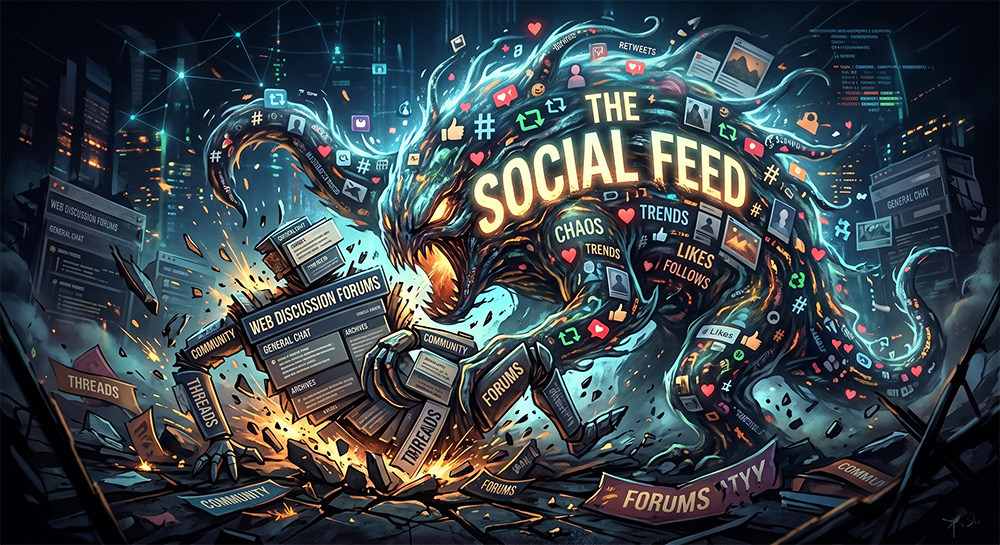
We all know the old news world is dying. The big, dusty newspapers are haemorrhaging money and closing down. We aren't reading the morning edition anymore. We're scrolling. Instagram. TikTok. And that's where the trouble starts.
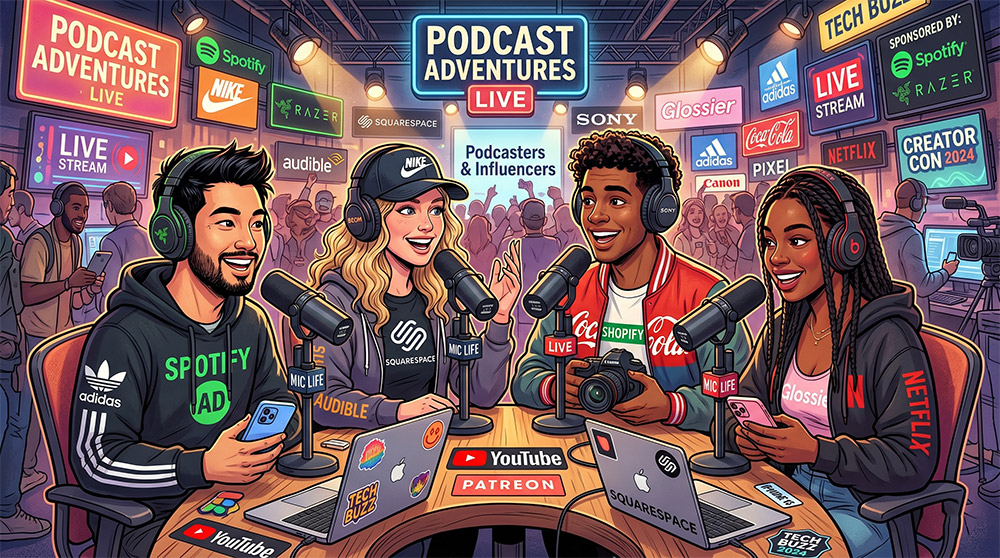
The new journalists aren't trained editors in tweed jackets. They're influencers and improvised creators, capturing our attention one 20-second reel at a time. But here's the problem: when we replace deep analysis with a barrage of short-form noise, critical thinking doesn't just decline — it vanishes.
The Transparency We Took for Granted
Older newspapers had their problems. They definitely played to their echo chambers. But at least you knew what you were getting. You knew the name of the journalist. You could see the political bias of the owner. It was transparent, even when it was flawed.
We see that principle at work even in "new media," when it's done properly. Look at Joe Rogan. Love him or hate him, when he has a head of state on for a three-hour conversation, it's genuinely insightful. You have the time and the space to think. You can analyse the logic, the nuance, the arguments. There's room for meaning to form.
"A 20-second reel isn't a conversation. It's a bombardment. It's designed to trigger a fast emotional response — not a logical one."
— Christian BertoliniThe New Currency Is Not Truth
The new currency of "journalism" isn't truth or depth. It's activity. How many likes? How many shares? And a significant portion of that activity is likely driven by automated accounts — bots artificially pumping certain narratives into our feeds, inflating signals of consensus that never actually existed.
The Ownership Question Nobody Is Asking
The scary part is the lack of transparency. Who owns this new wave of information? Is it Instagram? TikTok? Or the individual making the reel? In reality, the answer is the platform's algorithm — and nobody truly understands how it works.
Today, I saw something that perfectly illustrates the danger. I saw ten different reels, all by people I had never encountered before, all pushing the exact same message. Ten. The algorithm had decided this was my echo chamber and simply flooded me. But who created that message? Why did ten different people all decide to post it at the same time? Was it a coordinated campaign? Who funded it?
This is the central question we are ignoring. We knew the agenda of the New York Times or Fox News. We disagreed with it, argued about it, wrote columns dissecting it. But we have absolutely no idea what the intention is of these new promoters of "information." We don't know who they are, who is paying them, or what their long-term goal is.
"Someone is winning here. Someone is gaining power or money by influencing us this way — politically, economically. And because we aren't asking who, why, and for how much, we are the product being sold."
— Christian BertoliniReclaiming the Right to Think
It's time to stop passive scrolling and start asking critical questions again. Three questions every piece of short-form content should face before you share it: Who created this? Who benefits from me believing it? Is there a primary source I can verify?
Because if we don't ask them, we aren't just losing our newspapers. We're losing our ability to think for ourselves — and that is a territory far more difficult to reclaim than a subscription.