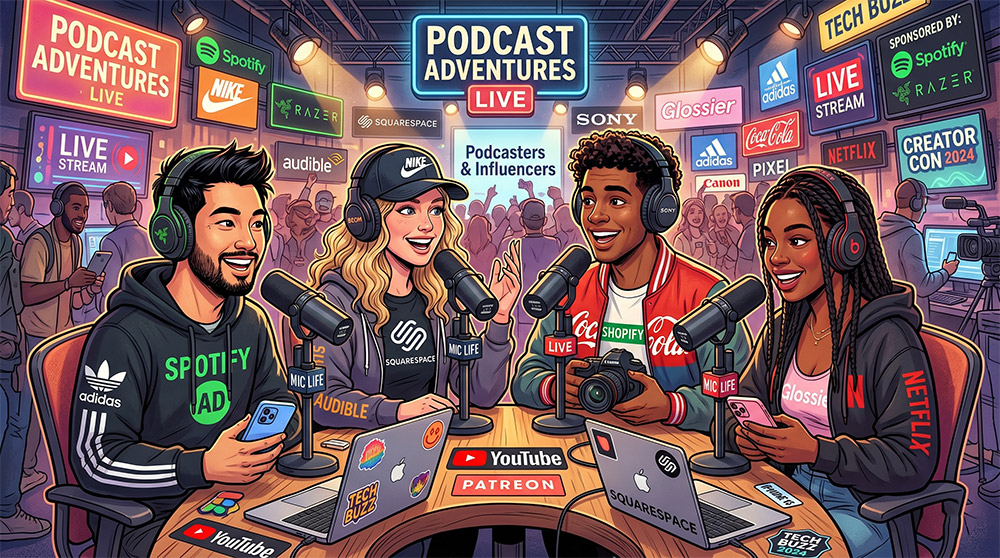
Open any feed today and count how long it takes to find an actual conversation between two people who know each other. You'll scroll a long way. What you'll find instead is broadcast: a podcaster clipping himself, a creator selling a course, a brand disguised as a person, a stranger performing an opinion for an audience of strangers. The machinery is louder than ever. But the social part — the reason these platforms were built — has quietly left the building.
This isn't nostalgia. It's a structural shift. Social media didn't fail; it changed jobs. It became media — a distribution channel where a few people talk and millions scroll. Just as "the news" slowly became "the bad news," the social network slowly became the anti-social network: a place you go to be shouted at, sold to, and occasionally enraged, but rarely a place you go to talk to a friend.
The feed didn't kill conversation. It relocated it — into rooms with the door closed and the nastiness left outside.
The Quiet RoomsWhen the Feed Became a Stage
There's a reason for the shift, and it isn't malice — it's incentives. An advertising business is paid for attention, and the surest way to hold attention is emotion. Outrage travels further than warmth. So the ranking algorithm, doing exactly what it was built to do, promotes the loudest and the angriest, and buries the quiet reply from someone you actually like. Over time the comment section fills with vitriol and bots, people stop engaging because engaging feels dangerous, and the whole space tilts toward performance and away from connection.
Each platform found its own version of the same fate. LinkedIn became a theatre of self-promotion, ringed by colleagues leaving bored, faintly condescending replies. Facebook became advertisements and real-estate listings with the occasional birthday. The timeline optimised for time-on-site, and time-on-site turned out to be the enemy of feeling good about the people you were spending it with.
Where the Social Went
Here's the part the doomscrollers miss: the social didn't die. It migrated, and it privatised. Look at where people actually talk now — the group chat, the server, the close-friends story, the paid newsletter's comment thread, the WhatsApp thread that never sleeps. The connection went somewhere the algorithm couldn't reach and the advertiser couldn't follow. It went behind a wall.
If you're old enough, you remember what this used to look like: forums. Small, topical, moderated corners of the internet where people who cared about the same thing showed up to talk about it, and where the regulars kept the tone civil because it was their place. Forums lost to social platforms not because they were worse, but because they were harder to find, harder to join, and impossible to scale. The very things that made them good — small, moderated, focused — capped how big they could get.
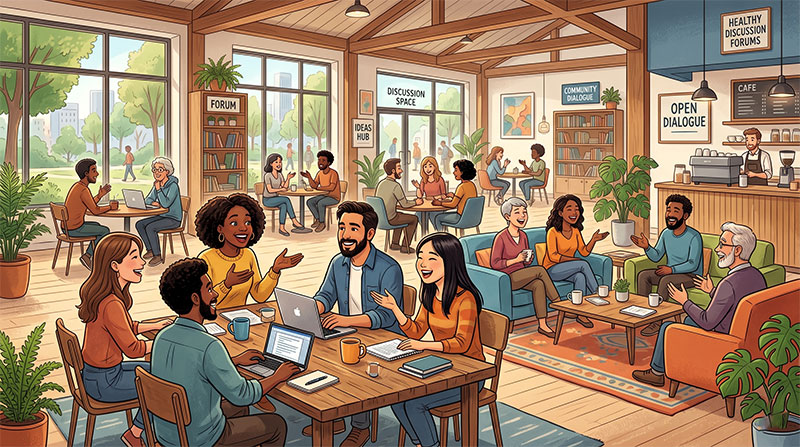
What's emerging now is the forum's idea reborn with better tools and a real business model behind it: fragmentation, in the good sense. Not one crowded public square where everyone yells past each other, but thousands of small, intentional rooms — each one about something, each one with the nastiness left at the door, each one a place people choose to be rather than a place they're funnelled into.
Fragmentation by choice, not by algorithm. A thousand small rooms beat one loud square.
The Quiet RoomsThe Fee That Buys the Absence of Ads
The natural objection is money. If there are no ads and no data to sell, who pays for the lights? And the answer is the quietly radical part: the members do — a little. A few dollars a month. It sounds like a small thing. It's actually the whole thing.
The fee isn't primarily a bouncer that keeps bad actors out, though it does raise the cost of showing up to cause trouble. Its real job is to replace the advertising model entirely. Once a community is funded by the people inside it, it has no reason to harvest their data, no reason to rank for outrage, no reason to optimise for time-on-site. The thing that broke Facebook is simply absent. You are no longer the product, because someone finally decided to pay — modestly — for the space itself.
That small payment does two jobs at once. It gives every member skin in the game — you don't burn down a place you chose to pay for and belong to — and it aligns the money with the mission instead of against it. The business model and the culture stop fighting each other. This is the design principle behind BamVox: a community platform where a modest membership does the work that surveillance advertising used to do badly.
A Room of One's Own
Not a feed, a place. Topical, gated, and small enough that real interaction is possible. The nastiness is left at the door because the door actually exists.
The Fee Buys the Absence
No ads. No trackers. No harvested data. A few dollars a month replaces the entire surveillance model — so the space has no incentive to sell you or enrage you.
The Warm Start
The hardest problem in community is the cold start. An existing audience solves it — a slice of followers becomes the first citizens, so the room is buzzing on day one instead of echoing.
Founder of the City
The founder lights the fire and names the place. The members build it. It's a city, not a one-person show — and a city keeps buzzing even when its founder logs off.
Escaping the Content Treadmill
Most creator platforms have a hidden flaw: they make the creator the product. In the subscription-content paradigm, the moment you stop producing, the value stops and the members leave. It's a treadmill, and it doesn't scale down — a small creator burns out fast, chained to a posting schedule forever. This is the paradigm most of today's tools quietly assume.
The better model flips the source of value from the founder to the members. A bodybuilder with a large following doesn't need a community that's about them — a fan club that dies the week they stop posting. They need a community about the thing their followers already care about: the training, the discipline, the nutrition, the lifestyle. They found it and bring the first members. After that, the members carry it. The founder's job shifts from performer to host — a lighter, more honest, more sustainable job, and a real answer to burnout.
"The community is about me. If I stop posting, it dies. I owe it five days of content a week, forever. My reach is a vanity number I can't convert and don't really own."
"The community is about the topic we all love. I founded the city; the members keep it alive. I don't have to perform to sustain it — I host it. And it's mine."
Notice how the pieces lock together. The follower count is the reservoir. The warm start is how you fill the city on opening day. And "about the topic, not the person" is what keeps the city alive after the founder logs off. Each idea answers the weakness of the one before it — which is rare, and it's why this model holds up where "forums, but bigger" always fell apart.
Sustainable Even When Small
This is the quiet revolution, and it's the thing the ad-funded giants structurally cannot copy. When your business is a modest membership fee instead of advertising, you no longer need to be enormous to survive. You don't need a million subscribers. A few hundred to a few thousand of the right people — engaged, paying a little, genuinely glad to be there — can fund a healthy, ad-free, well-moderated space. Small stops being a problem to outgrow and becomes a feature to protect.
And a large following isn't the destination — it's the fuel. A creator with a million followers won't turn all of them into members, and shouldn't want to. But even a small fraction is a warm start most people would kill for: enough founding citizens to make the room feel alive from the first day, converting a passive, borrowed, ad-owned audience into a small, owned, sustainable community where the relationship is direct. You have a million followers and no idea who any of them are. BamVox is how you finally meet the few hundred who matter.
You have a million followers and can't name one. The point was never the crowd — it was the few who'd actually show up.
The Quiet RoomsWhat Makes a Room Thrive
- Build the community around a topic, not a personality — the shared obsession is what keeps it alive when you log off.
- Use your existing audience as the warm start — invite a slice, not the whole crowd, and let density beat size.
- Keep the fee modest — it exists to replace advertising, not to maximise revenue. Belonging is the product.
- Give members real tools to run the place — threads, events, a persistent library — so the city can build itself.
- Host, don't perform — move from producing content on a treadmill to stewarding a space that runs on its own energy.
Start your own quiet room.
BamVox lets anyone build a private, member-funded community that stays sustainable even when it's small — no ads, no data harvesting, no content treadmill. Found the city. Let the members build it.
Explore BamVoxThe public feed isn't dying — it's changing jobs. It became a broadcast medium: a few people talk, millions scroll. The social part, the actual conversation between people, didn't disappear. It moved into smaller, private spaces like group chats, servers, and membership communities where real interaction is still possible.
A free group chat is your existing friends. A paid community is where you meet strangers who share the thing you care about, with structure a chat can't hold — topics, threads, moderation, events, a persistent library. The small fee does two jobs: it gives members skin in the game, and it replaces advertising entirely, so the space has no reason to harvest your data or optimise for outrage.
When the business model is a modest membership fee instead of advertising, you don't need millions of users to survive. A few hundred to a few thousand paying members can fund a healthy, ad-free, well-moderated space. Sustainability at small scale is exactly what ad-driven platforms structurally cannot offer — and what BamVox is built to make possible.
No — and that's the point. The most durable communities are built around a shared topic, not a personality. The founder lights the fire and brings the first members, but the space is kept alive by the members themselves. The founder is the founder of the city, not the entertainer who has to perform every day to keep it running.
Those platforms either take a large cut, need scale to matter, harvest data, or make the creator a content hamster who must keep producing forever. BamVox is built for member-funded communities that stay sustainable when small, own their space, run without ads or data harvesting, and are powered by members rather than a single performer.