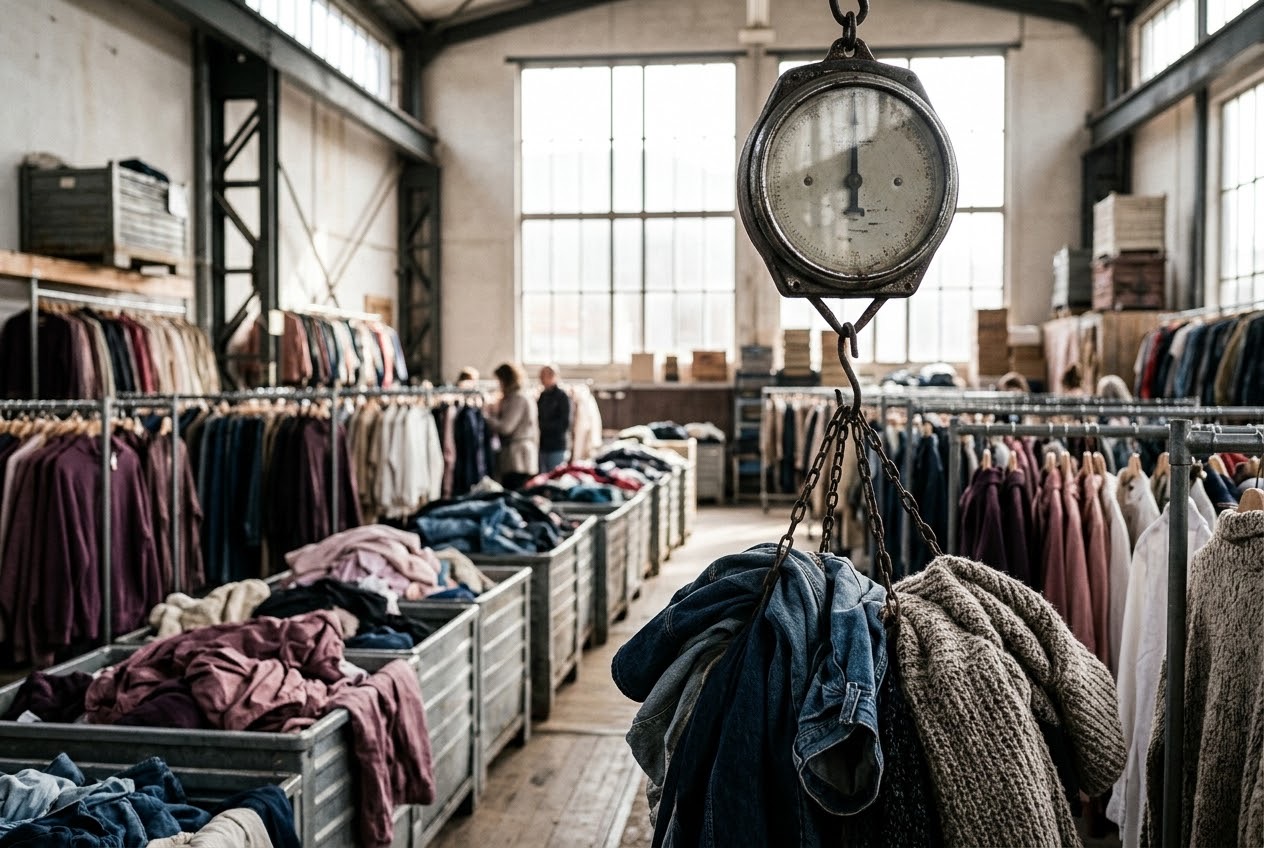
Something unusual is happening on Dutch high streets. Between the Zara flagships and oat-milk cafés, a new kind of retail has arrived — one where the price tag is replaced by a set of scales. Kilo shops have moved second-hand shopping out of charity-shop obscurity and into prime commercial real estate, reframing vintage as an experience rather than a compromise.
But beneath the treasure-hunt thrill and the pleasingly low price-per-kilogram, a more complex question lingers: is this genuine slow fashion, or have we simply found a more aesthetically pleasing way to over-consume?
The Rise of the Kilo Concept
In cities like Amsterdam, Utrecht, and Rotterdam, stores such as Kiloshop and Kilo Kilo — alongside touring pop-up events like Vinokilo — have made buying by weight feel like a modern, even progressive act. The format is simple and deliberately theatrical.
Rather than individual price tags, garments are sorted into colour-coded rails, each with a fixed per-kilogram rate. A red tag might mean premium vintage at €30 per kilo; blue and green tiers bring the price steadily down. Customers fill a basket, head to the scales, and pay accordingly.
The appeal reaches well beyond price. The format turns shopping into a hunt — a tactile, unhurried dig through rails that rewards patience and knowledge. For Gen Z and Millennials who value both individuality and value, it hits a particular sweet spot: the uniqueness of vintage at something approaching fast-fashion price points.
"High-quality vintage — which in specialist boutiques can demand boutique prices — suddenly becomes accessible at a weight-based rate that undercuts Zara."
GlamBon Fashion DeskIs It Truly Slow Fashion?
The slow fashion movement's core argument is straightforward: buy less, buy better, keep it longer. On the surface, kilo shops seem to serve this perfectly — no new garments are produced, no virgin resources are consumed, and existing clothes are kept in circulation rather than heading to landfill.
The reality, as ever, is more nuanced. The same affordability that makes kilo shops accessible also makes them susceptible to bulk buying. When a heavy denim jacket costs the same as a fast-food lunch, the psychological barrier to over-purchasing dissolves. Critics of the format argue that buying five kilograms of clothes because it is cheap is structurally no different to buying five items on a Zara sale — the outcome is the same quantity of clothing entering a wardrobe that cannot absorb it.
| Aspect | Why It's Slow Fashion | Why It Might Still Be Consumerist |
|---|---|---|
| Lifecycle |
Positive
Keeps existing garments in circulation, preventing them from entering Dutch landfill.
|
Risk
Can encourage bulk buying simply because the per-item cost is low, leading to wardrobe clutter.
|
| Production |
Positive
Zero new resources — water, dye, fabric — are consumed to create the stock.
|
Risk
Logistics of shipping tonnes of vintage clothing across borders carries a measurable carbon footprint.
|
| Mindset |
Positive
Encourages appreciation for older, higher-quality fabrics over disposable trends.
|
Risk
Low per-item cost can lead buyers to treat second-hand clothes as equally disposable as fast fashion.
|
The Dutch Context: Circularity 2050
The Netherlands sits in an unusual position globally. Its national target is to be 100% circular by 2050 — an ambition that requires not just industrial transformation, but a wholesale rethink of how consumers relate to material goods. Textiles represent one of the most visible and tractable parts of that challenge.
Kilo shops slot neatly into the circular economy framework. By creating an attractive, experience-driven retail format around second-hand clothes, they redirect the "newness craving" — the desire for something fresh and new — toward the existing stock of garments rather than newly manufactured ones. For policymakers and circular economy advocates, this is meaningful progress.
Yet the critics' point remains sharp: circularity is not simply about where products come from, but how many of them we consume and for how long we keep them. A kilo of vintage bought impulsively and discarded within a season achieves little for either the consumer or the planet.
"For fashion to be truly slow, we need to buy less — not just buy used. Quantity remains the unresolved variable."
Circular Economy PerspectiveThe Bridge Argument
The most honest framing of the kilo shop phenomenon is this: it is a bridge, not a destination. It moves mass-market consumers away from fast-fashion production without asking them to immediately embrace the full discipline of slow fashion — the radical reduction in purchasing, the long-term investment mindset, the willingness to pay boutique prices for quality.
Whether that bridge leads anywhere depends almost entirely on the person standing on it. One kilogram of carefully chosen vintage, worn for years and eventually repaired rather than replaced, is slow fashion. Five kilograms bought because the scales made it feel cheap, worn briefly, and passed on within the season is simply the fast-fashion cycle running on second-hand fuel.
A bridge — not a destination
Kilo shops are a genuine step forward for the circular textile economy. They democratise quality vintage, divert clothing from landfill, and bring slow fashion aesthetics to a mainstream audience. But they only fulfil their promise when the buyer treats those finds as long-term staples rather than temporary thrills. The scales at the checkout weigh the clothes. The harder measurement — how long you keep them — falls entirely to you.