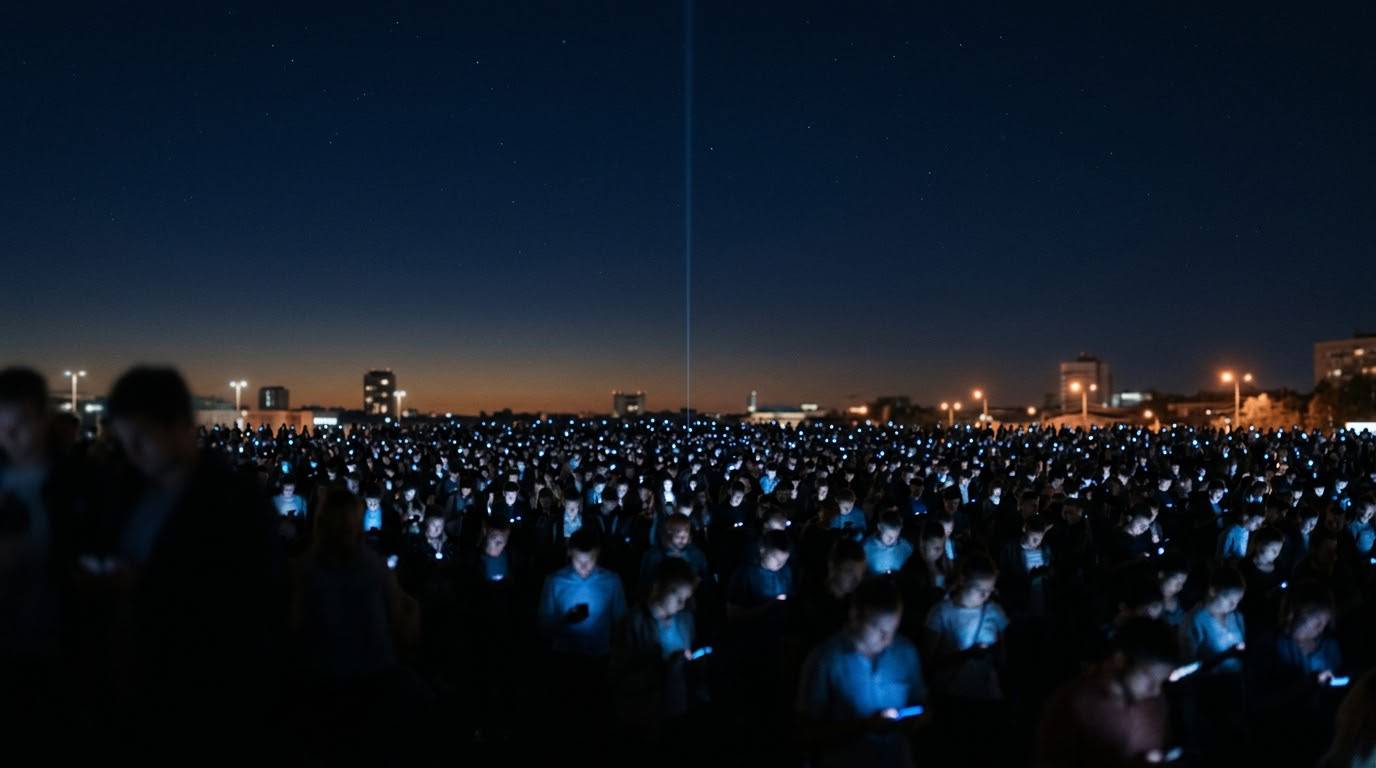
It is easy to assume the worst: that engagement with alternative narratives signals a breakdown in scientific literacy, a deep-seated distrust of authority, or something more troubling still. But for the modern media consumer, the shift toward conspiratorial content often has far less to do with genuine belief and far more to do with something much simpler — entertainment value. We have always preferred the version of events that gives us something to do.
The Reality Gap: Technical Precision vs. Narrative Thrill
The reality of space exploration is, by necessity, a series of cold technical facts. A successful mission is often defined by the complete absence of drama — smooth launches, predictable orbital burns, and years of quiet engineering. The Artemis programme is a triumph of international collaboration and propulsion chemistry. It is also, viewed as a piece of content, extremely difficult to make gripping.
| Feature | The Real Artemis Mission | The Conspiracy Narrative |
|---|---|---|
| Pacing | Years of testing and incremental delays | Fast-paced daily "revelations" |
| Complexity | Orbital mechanics and propellant ratios | Relatable human drama and hidden agendas |
| Visuals | Raw telemetry and static feeds | Cinematic "clues" and symbolic imagery |
| Engagement | Passive observation | Active sleuthing and community participation |
| Stakes | Structural integrity margins | Civilisation-level cover-ups |
For the average viewer, watching a rocket sit on a launchpad during hours of cryogenic fueling is not prestige television. Conspiracy theories supply the cinematic layer the mission lacks. They transform a government programme into a high-stakes thriller — complete with hidden lunar bases, suspicious shadows, and an antagonist operating at a planetary scale. That is not ignorance. That is narrative preference.
"It is not that people distrust the Moon — they distrust a story that gives them nothing to solve."GlamBon Culture Editorial
The Gamification of Information
We live in an era of interactive entertainment — and engaging with a conspiracy theory offers a form of participation that a NASA press release fundamentally cannot. The activity is the point. The theory is merely the game board.
-
01
The Detective Element Analysing a photograph for anomalies — a suspiciously sharp shadow, a flag that shouldn't billow — feels like solving a puzzle. It transforms the viewer from passive spectator to active protagonist. The mission becomes a level to complete.
-
02
The Community Factor Discussing what "they aren't telling us" generates immediate social bonds. Digital communities form around shared discovery, shared vocabulary, and the particular warmth of being someone who pays attention. Belonging, not belief, is often the primary draw.
-
03
Low Stakes, High Reward One can engage with the narrative of a staged Moon landing much like a science fiction film — intellectually, playfully, without full conviction. It is speculative "what if" storytelling with an unusually good set of props: real rockets, real footage, and the genuine enigma of outer space.
Entertainment Over Ideology
It is a mistake to assume that everyone engaging with these theories is a believer in the conventional sense. In many ways, conspiracy culture has become a branch of the creator economy, with its own genre conventions, recurring characters, and devoted fanbases. Creators produce "deep dives" not because they are driven by ideology but because the narrative arc of a mystery — with its reveals, red herrings, and cliff-hangers — is structurally more compelling than a lecture on escape velocity.
The cold technicality of the Artemis mission is an extraordinary feat of human engineering. It is also a story told in the language of orbital mechanics and systems checklists. Conspiracy content offers a translation into the vernacular of drama: heroes, villains, hidden truths, and stakes that feel personal. Audiences leaning into the more fantastical elements of space lore are, more often than not, simply looking for a way to make the vast, silent void feel populated — and a great deal more interesting.
"Accuracy without entertainment is a distribution failure. The conspiracy theorist understands this instinctively. The press office does not."GlamBon Culture Editorial
This is not a criticism of NASA's communication strategy — it is an observation about the architecture of attention in a saturated media environment. Every genre of entertainment has learned to wrap its content in emotional hooks. Science communication, by and large, has not. The gap is filled by whoever tells the better story. Currently, that is often someone on YouTube with a ring light and a theory about the Van Allen belts.
Looking Up, Looking Sideways
As we look toward the lunar south pole with Artemis, it is worth acknowledging that fascination with the hidden is not always a rejection of the real. For most people, it is not even a binary choice. They can watch the launch, be genuinely moved by it, and simultaneously enjoy the elaborate theatre of "what if this were a lie." These are two different modes of engagement with the same phenomenon — one epistemic, one aesthetic.
The Artemis mission will give us the Moon. The theories will give us a reason to keep talking about it long after the engines have cooled. Both, in their own way, are keeping the lights on for human curiosity about space — which, perhaps, is worth something after all.