There is a movie coming, and everyone seems to already know how it ends. Disclosure, contact, the long-promised confirmation that we were never the only ones here. I find I don't have a horse in that race. I don't care very much whether the things people are bracing for turn out to be ships, or beings, or something with no noun attached to it yet. What caught me wasn't the question of whether we're alone. It was a smaller, stranger thought that arrived underneath it and refused to leave.
What if something is here, and what it wants from us isn't the planet, or our bodies, or our obedience. What if what it wants is our anger.
A farming species
We are a farming species. It is, when you strip everything else away, the thing we do. We discovered that if you tend a field, the field feeds you; that if you keep the animal, the animal feeds you. We are extraordinarily good at building quiet systems that convert a living thing's existence into something we can consume — systems the living thing inside them never has to understand, or even notice. A cow in a good pasture does not know it is livestock. It knows there is grass, and weather, and a fence somewhere at the edge of things that it never quite reaches.
I keep wondering what our fence looks like.
Because here is what I notice about myself, and suspect about you. We thrive in peace. A calm week does something to a person — opens them, makes them generous, makes them build. And in anxiety we contract. We get smaller, meaner, more frightened, less able to make anything that lasts. If you wanted a species to flourish, you would give it peace. And if you wanted to harvest something from it — if a frightened, enraged human produced something a calm one didn't — you would do the opposite. You would keep the field agitated. You would make sure the grass never quite stopped trembling.
The thing that wears your face
Years ago there was a series — I had to go looking for the name, it's The Outsider — built around an entity that did exactly this. It didn't attack you. It wore the face of someone you trusted, used that face to commit something unbearable, and then it stood back and fed. Not on the victim. On everyone left behind: the grief, the suspicion, the rage that radiated outward through a whole town that no longer knew who to trust. The horror of it wasn't the violence. It was the economy of it. Something had found a way to turn human pain into a meal, and the humans producing the meal experienced it only as their own lives.
I think about that structure more than I'd like to admit. Not because I believe in El Cuco — I don't. Because the shape is so clean. A predator that never has to reveal itself, because the prey does all the work of producing what it eats.
The feed
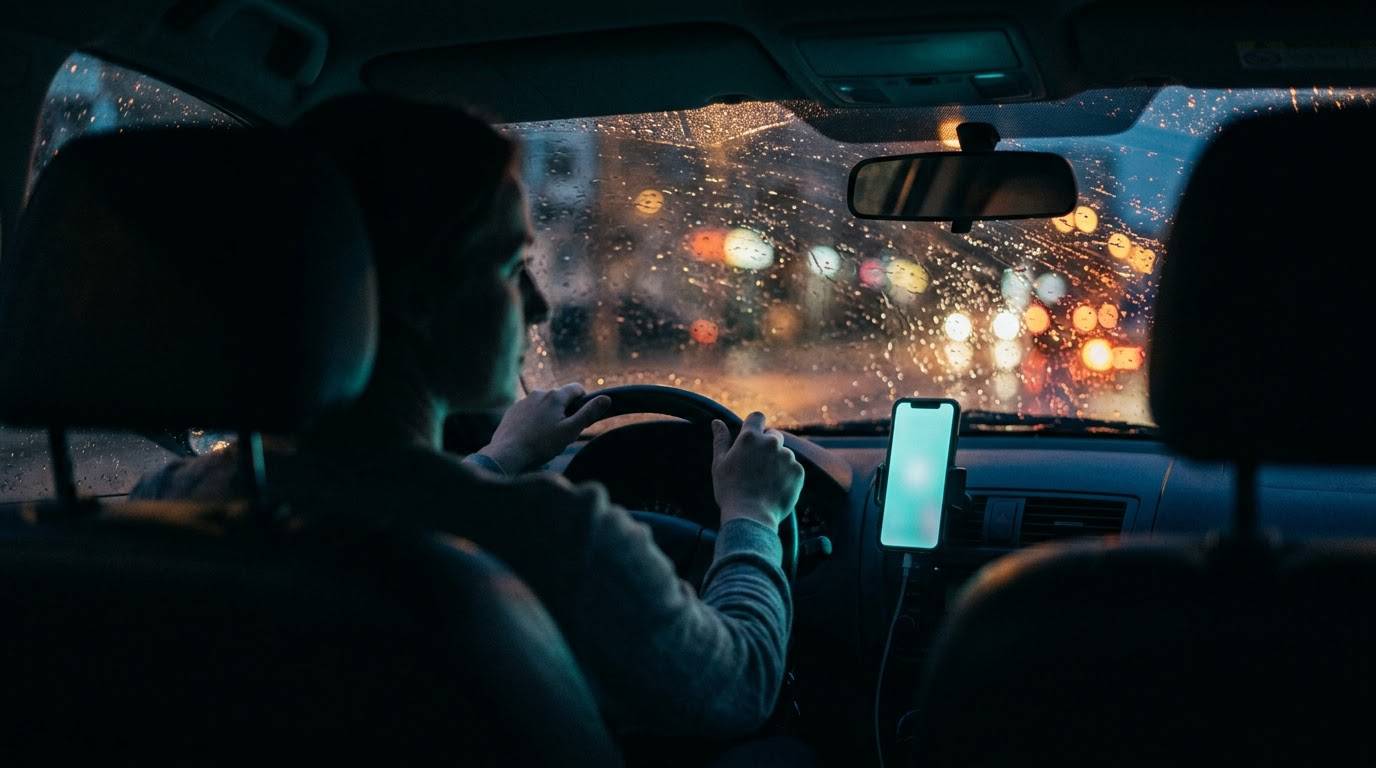
Consider what actually reaches me on an ordinary day. I turn on a screen and it hands me the news, and the news is not news, it's bad news, it has been bad news for as long as I can remember, and somewhere along the way I stopped expecting otherwise. The images built to catch my eye are images of disaster. No one has ever made me a thumbnail of a person saying I'm content, things are fine. The hook is always a wound. The headline is always something about to be taken from people I love.
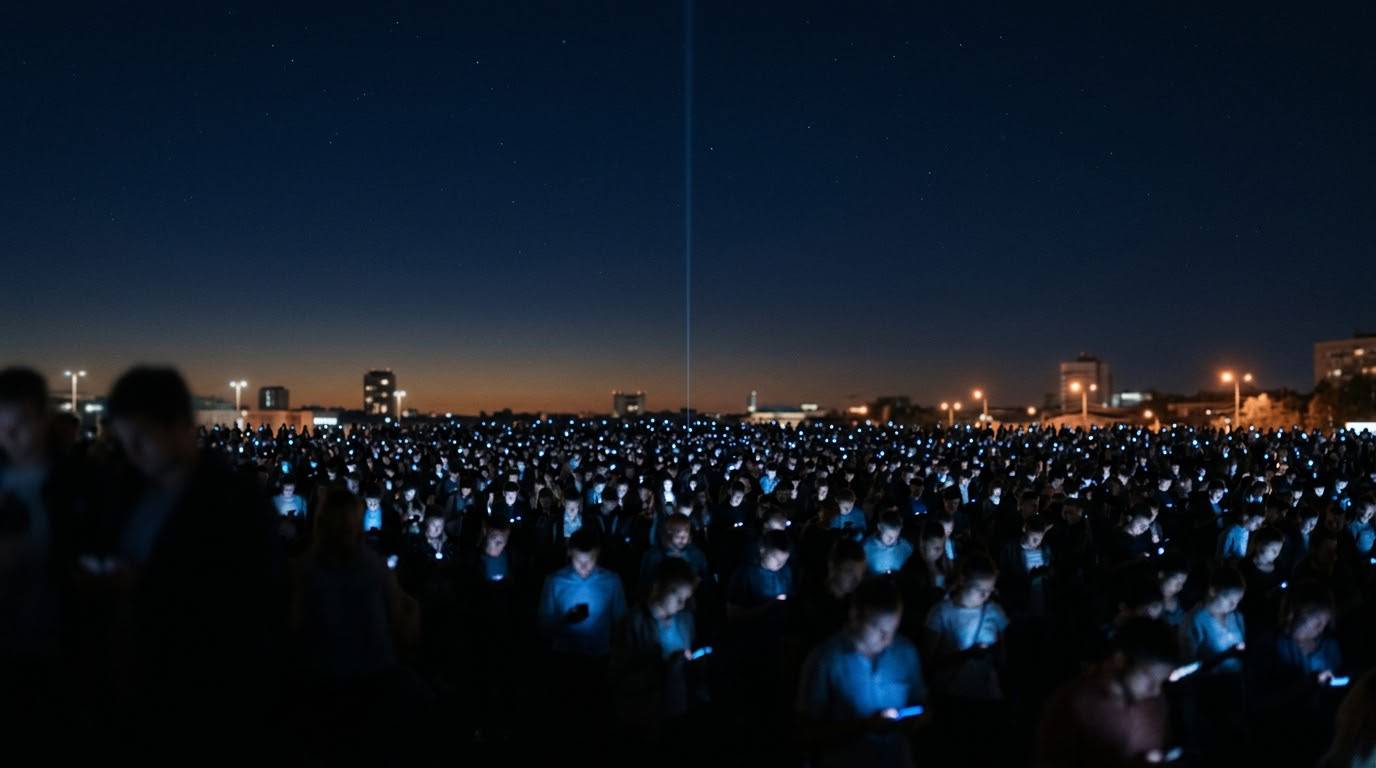
And it works. That's the part I can't talk myself out of. It works on me. I feel the pull of it the way you feel a current when you're already too far from shore. I tell myself it's probably nothing — that this is just how attention behaves, just incentives and engagement and the cold machinery of getting clicked. Maybe. But notice that the explanation and the suspicion describe the same thing. Whether it's an algorithm or an appetite, the outcome is identical: a system, vast and patient and indifferent to me, that does better when I am afraid. Something on the other end of the feed is eating, and it is eating well.
What I can't get behind
Here I have to be honest about the floor under all of this, because it's the same floor everything else of mine stands on.
I only know what reaches me. That's the whole of it. Everything I call the world arrives through five narrow doors, and I have no way to step outside and check what's doing the delivering. I cannot get behind my own senses. The reality I move through is, as far as I can ever prove, a reality that was handed to me — and I had no part in choosing it, no record of who packed it, no receipt. I've written before about the suspicion that the life I'm living might be running for an audience of one, built to my specifications by something I'll never meet. This is that same suspicion in different clothes. If a reality can be delivered to me, it can be flavored. And if it can be flavored, then the steady drip of dread I mistake for the way things are might not be a fact about the world at all. It might be a setting.
Who set it? I don't know, and I want to be precise about that, because the easy move here is to name a villain, and I can't. I didn't build this. I can't point to a them. When I say something is farming us, I'm not naming a culprit — I'm naming an effect I can feel and a source I will never reach. I feel fine, I want to say, and then I notice that I don't, quite, and that I can't tell you why, and that I can't find the hand that did it.
That gap — between the effect I can feel and the source I can't reach — is the only place I know to put the word supernatural. Not as a belief. As a name for the part I can't get my fingers around. Something is on the other side of the wall. I can hear it well enough to describe the wall. I will never see the thing.
The open door
I don't have an ending for this, and I've decided that's the most honest thing about it. If I wrapped it up — and so, you see, it was only the attention economy after all — I'd be doing the very thing the feed does: handing you a tidy reality and asking you not to look behind it.
So I'll leave the door open, the way it has stayed open for me. Notice, sometime today, how easily you were made angry. Notice how little it took, how ready you already were, how the match found dry wood every single time. And then ask the only question I've been able to formulate: if you were being farmed for exactly this — if your fear were the crop — what, from the inside, would be any different?
I can't put my finger on it. Neither, I suspect, can you.
A handful of the words on this page changed while you were reading them. They did not change back. I left it that way on purpose.
Before you go
No, and that's the honest position. It's a thought experiment, not a claim. The unsettling part isn't that it's true — it's how little has to be true for it to feel plausible from the inside.
Only as the weather that prompted the thought. The subject isn't whether we're alone. It's the unseen mechanism that keeps us agitated, and the fact that we can't get behind our own senses to check what's delivering our reality.
The Outsider (HBO, 2020), from the Stephen King novel, with Ben Mendelsohn. Its entity wears the faces of trusted people, engineers atrocities, and feeds on the grief and rage left behind.
Maybe. But the mundane explanation and the supernatural suspicion describe the same outcome: a vast, patient system that does better when you're afraid. Whether the engine is an algorithm or an appetite, the effect on you is identical.