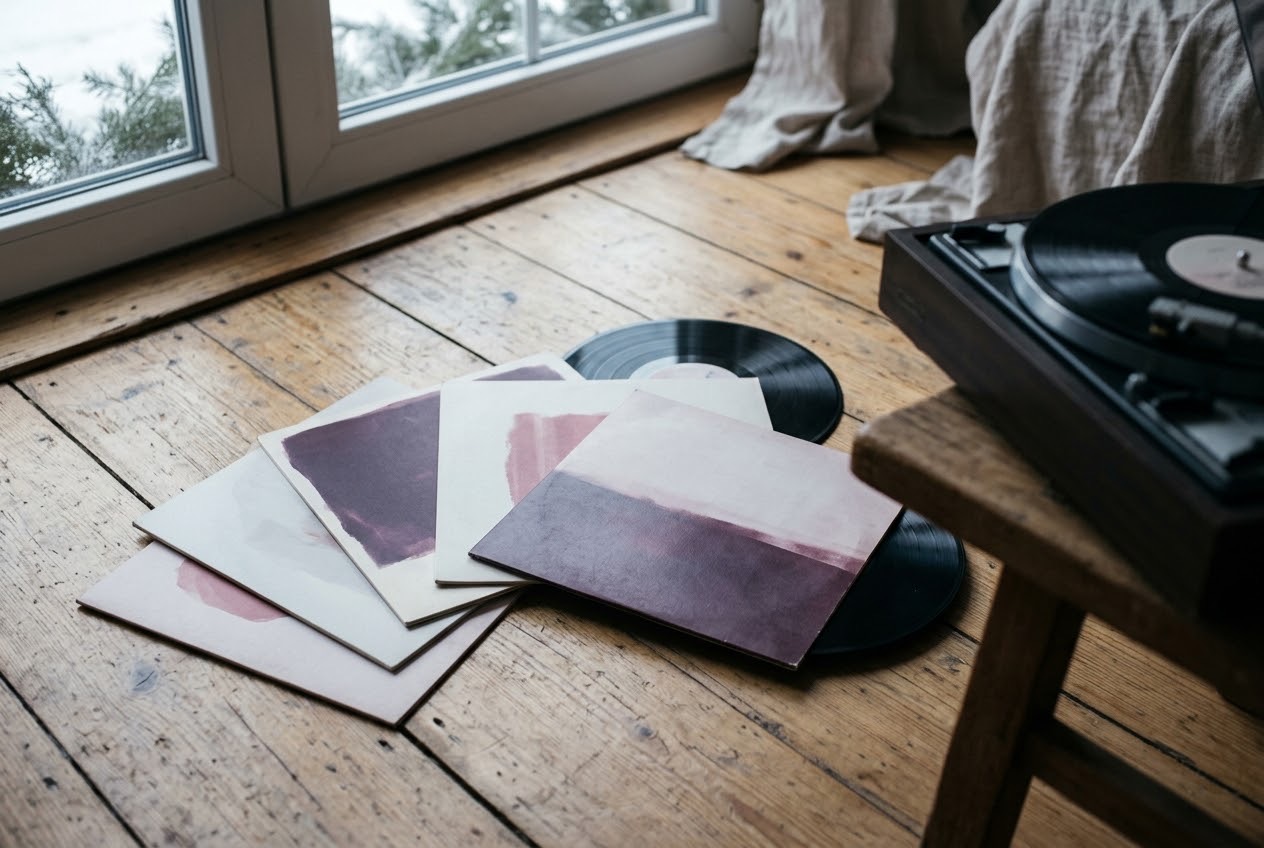
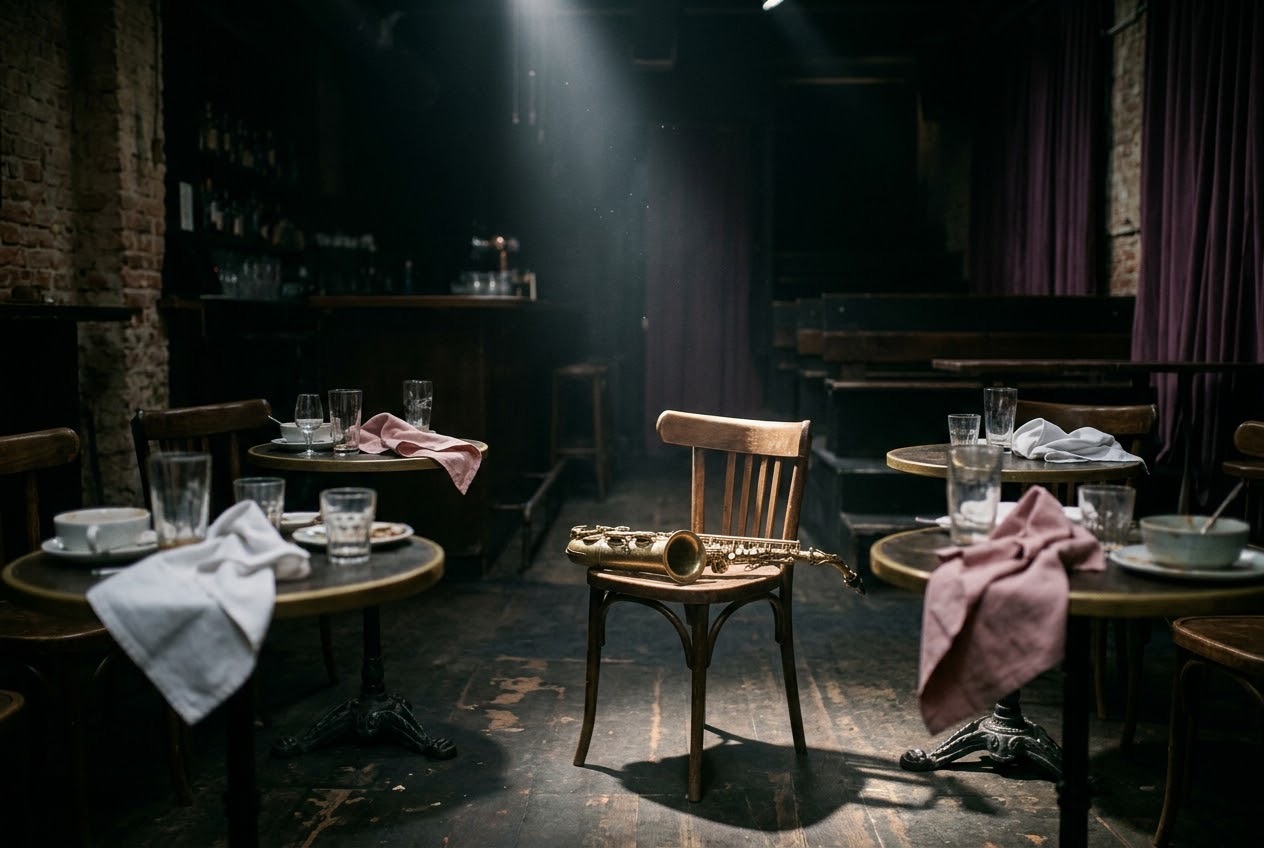
We all remember the prophecy. "Video Killed the Radio Star" was the first music video ever played on MTV—a literal and symbolic declaration that the dial was dead and the screen was the new king. Yet, decades later, the reality of 2026 is far more nuanced than that prophecy implied. While television is currently imploding—choking on stale programming and being rapidly bypassed by podcasts and long-form digital conversation—radio remains stubbornly, brilliantly alive.
The Power of the Passive Listen
Radio occupies a privileged position in the listener's day for a reason that video can never replicate: it doesn't demand your eyes. In a world competing for every micro-second of visual attention, radio is the ultimate companion. It's what we lean on while driving, cooking, or working. It delivers entertainment and information without being intrusive.
This ambient quality is one of the medium's most underrated assets. It fills the room without sucking the life out of it, allowing us to exist in the physical world while staying connected to the musical one. No buffering. No autoplay trap. No notification badge demanding attention. Just sound, doing what sound does best: occupying the air between thought and action.
"In a world competing for every micro-second of visual attention, radio is the ultimate companion—present without being intrusive, ambient without being invisible."Christian Bertolini — GlamBon
Escaping the Algorithmic Filter
Perhaps the most refreshing quality radio offers today is escape from the Algorithm. On TikTok, Instagram, and YouTube, music is no longer a standalone art form—it is a tool. A vehicle for reels. Background noise for viral challenges. A hook engineered to survive three seconds of thumb-scroll before the user moves on.
The music industry has become increasingly obsessed with "TikTok successes": short, catchy snippets designed to keep eyes glued to a screen. But this optimisation for attention exacts a serious cost on the music itself:
- Context collapses. You rarely have time to appreciate the quality or depth of a track before the algorithm shoves an entirely different world into your face.
- Curation becomes circular. YouTube and Instagram push what has already been clicked on millions of times. The result is a feedback loop in which the indie and the niche are buried under a mountain of data-driven trends that reinforce themselves.
- Brevity becomes tyranny. Songs are increasingly written for their hook rather than their arc—to clip, not to breathe.
Radio still has the power to break that loop. In the 1990s, Nirvana's "Smells Like Teen Spirit" moved from a niche Seattle sound to a global phenomenon not because an algorithm identified it as high-performing content, but because human beings at MTV and at radio stations decided to push it until it broke through. Radio retains that power—the editorial courage to present a listener with something they didn't know they wanted, and give it space to land.
Editorial programmers make deliberate bets on unknown artists
Songs play in full—context, arc, dynamics intact
Screen-free; accompanies life rather than interrupting it
Local stations reflect specific cultural geography
Discovery is serendipitous—you hear what you weren't seeking
Surfaces what prior behaviour already endorses—a closed loop
Optimises for hooks; 30-second clips over full compositions
Demands eyes, reactions, comments—constant re-engagement
Global homogenisation—the same sounds everywhere at once
Discovery is simulated; personalisation narrows, not expands
The Homogenisation of "International Hits"
There is a strange and telling phenomenon unfolding in global broadcasting. Whether you are in the Netherlands, Switzerland, or Australia, you are likely to hear the exact same "International Hits" cycling on loop. The same voices, the same productions, the same sonic palette—replicated across continents as though geography had ceased to exist as a cultural variable.
"Is the music truly great enough to justify total saturation—or is it simply the safest bet a globalised industry knows how to make?"Christian Bertolini — GlamBon
When everything is "International," everything starts to sound the same. This is precisely where local music—and here I think of the astonishingly diverse creative scenes across Italy, where I spend considerable time—earns its distinction. Local music is often more experimental and more culturally honest because it isn't trying to fit within the narrow, polished constraints of a global hit. It has soul. It has grit. It reflects a specific geography, a specific cultural anxiety or joy, rather than a corporate boardroom's idealised notion of universal "vibe."
Radio, at its regional and specialist best, remains one of the last broadcast systems capable of holding that local specificity. It can play the Sicilian folk-jazz fusion nobody's algorithm has classified yet. It can air the emerging Milanese electronic producer whose work doesn't yet have enough streams to surface in anyone's recommendations. It can be, in other words, genuinely curious—rather than merely predictive.
Well Done, Radio
When you get into your car and turn that dial, there is often a small, quiet sense of relief. You are stepping away from the heavy filters, the frantic scrolling, the anxiety-producing scroll of social media. The radio doesn't ask anything of you except that you listen.
And in that simplicity lies a kind of sophistication that the streaming economy has yet to replicate. Radio remains one of the few broadcast environments where you can still encounter music that hasn't been pre-chewed by a TikTok trend cycle, pre-tested in a focus group, or pre-validated by a billion passive listens. It is a platform for the creative, the emerging, and the otherwise unheard. In an age of unprecedented digital noise, the oldest electronic medium is quietly proving to be the most refreshing.
So: long live the radio star. Unkillable, as it turns out, by video—and apparently by algorithm too.