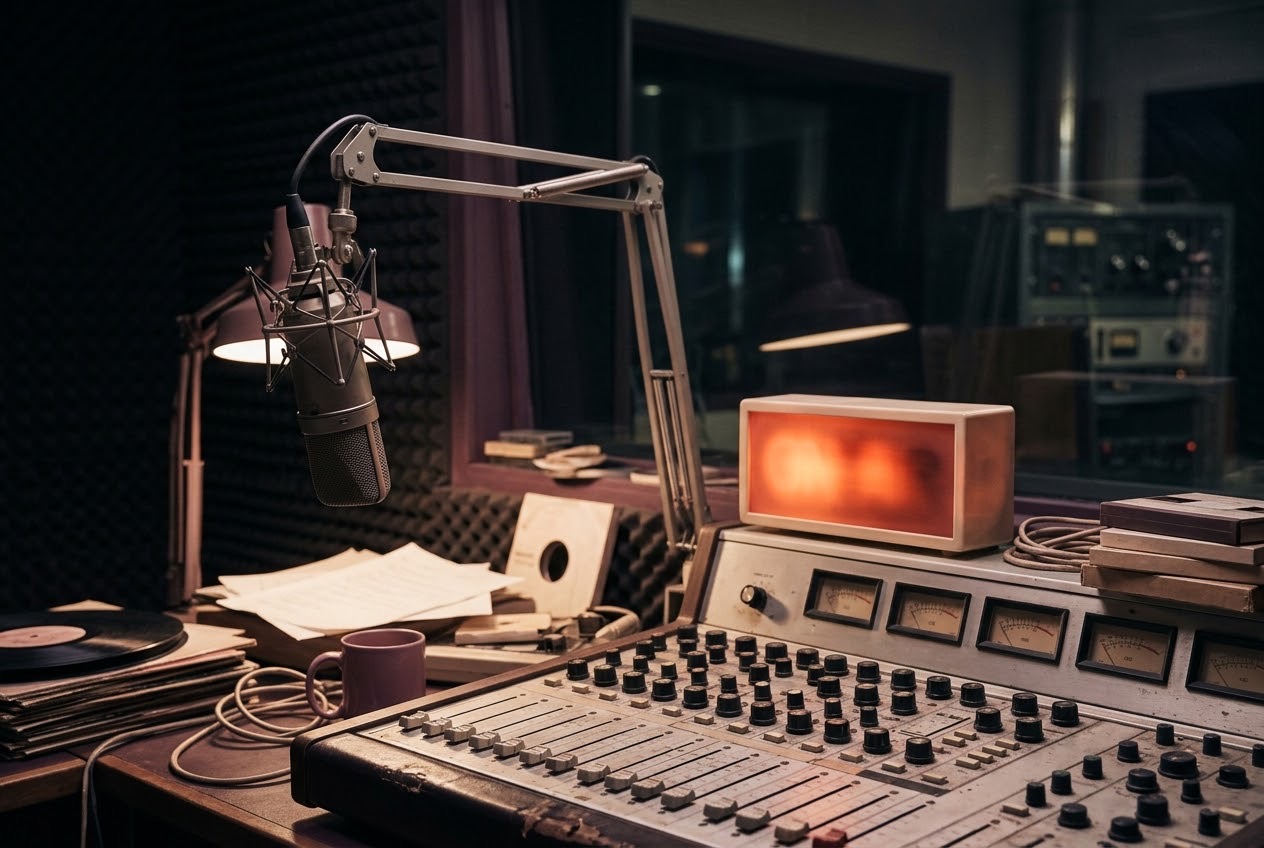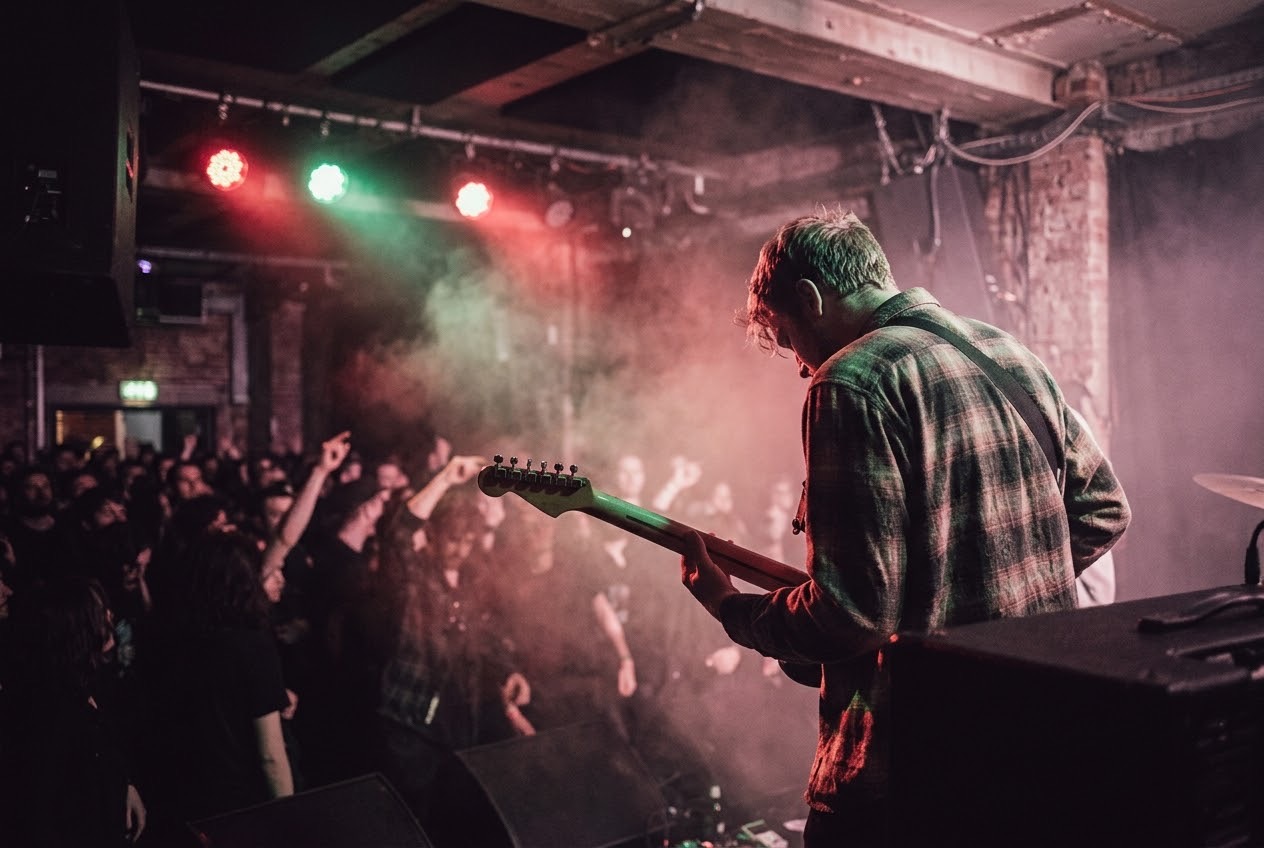
The air is thick with a familiar, distorted tension. If you have been paying attention to what is bubbling beneath the mainstream charts lately, you will have noticed a certain gloss fatigue taking hold — a collective restlessness among listeners who have had enough of the perfectly engineered, algorithmically optimised, emotionally inert product that passes for pop music in 2026.
We are not just close to a Grunge 2.0 moment. We are currently standing in the mud of its arrival.
The Great Gloss Fatigue
In the early 1990s, Grunge was not merely a sound — it was a physical reaction. A rejection of the overproduced, neon-soaked artifice of 80s hair metal and synth-pop, a refusal to participate in the glossy spectacle any longer. Today, we are watching the mirror image of that moment play out in real time.
Mainstream music in 2026 has become a product: engineered for the 15-second TikTok hook, optimised for algorithmic playlist placement, and stripped of any element that might disrupt the clean listening experience. It is music you consume, not music you feel. And that distinction is everything.
"Listeners are tired of the perfect vocal take. They want the voice that cracks. They're tired of the quantized drum beat. They want the morphine-thick sludge of a real kit in a real room."
GlamBon Culture DeskThis has created a massive, hungry vacuum. Not a vacuum of talent — there has never been more of it — but a vacuum of authenticity. A space aching to be filled by something raw, wild, and real.
The Rise of Grungegaze
While the mainstream stagnates, the underground has already pivoted. A movement many are beginning to call Grungegaze has taken root: a heavy, melancholic fusion of 90s Seattle grit and the ethereal, effects-saturated textures of shoegaze. The wall of sound is back — and this time it is intentionally, defiantly messy.
These acts share more than a sonic blueprint. The emotional core of the movement mirrors the original wave almost precisely — isolation, digital burnout, and a deep, unresolvable anxiety about the future. It resonates because it does not try to sell you a dream. It simply sits with you in the reality of the present.
How Grunge 2.0 Differs from the '90s
The original grunge movement was, in many ways, an accident of geography. Seattle's Pacific Northwest isolation bred a specific kind of sound that spread through tape trading and college radio, slowly enough that the culture had time to develop before the industry arrived to commodify it. The 2026 wave has no such geographic anchor.
| Feature | 90s Grunge | Grunge 2.0 — 2026 |
|---|---|---|
| Origin | Regional — Seattle & the Pacific Northwest | Global — internet-born, borderless scenes |
| Distribution | Tape trading & college radio | Discord servers & viral underground channels |
| Production | Analog and lo-fi by necessity | Hybrid and raw by deliberate choice |
| Aesthetic | Flannel and studied apathy | Doomscrolling grit and open vulnerability |
| Audience | Gen X finding a voice against boomer culture | Gen Z rejecting algorithmic emotional flattening |
This is both the movement's strength and its most interesting tension. A bedroom in London and a basement in Melbourne can be part of the same scene without ever sharing a physical space. The community is real; the geography is irrelevant.
Are We "There" Yet?
The short answer: we are in the transition. Grunge 2.0 is currently in its Mudhoney phase — loud, bubbling in the clubs and on the underground forums, building a community of creative outcasts who have collectively decided that the mainstream's sameness is no longer acceptable. It has not yet broken the surface of the mainstream. But the pressure is extraordinary.
The mainstream infrastructure — major labels, radio programmers, streaming algorithm curators — is still clinging to the old pop formulas. The data tells them to. But data reflects what listeners tolerated yesterday, not what they hunger for tomorrow. And the listeners, increasingly, have already moved somewhere darker and more honest.
"We are one 'Smells Like Teen Spirit' moment away from this breaking the surface. The next wave won't come from a boardroom in Los Angeles — it's coming from a bedroom in London or a basement in Melbourne."
GlamBon Culture DeskWhat that moment looks like is impossible to predict — it never is, in advance. Cobain and Nirvana were not the first; they were simply the ones who arrived at exactly the right time, with exactly the right song, at exactly the moment the audience had reached its limit. That moment is approaching again.
The distortion pedal is back on
The music isn't just morphing — it's returning to its roots. To the wild, the unpolished, the true. Grunge 2.0 won't announce its arrival with a press release or a playlist pitch. It will announce itself the same way the original did: with a riff so honest it leaves no room for argument, in a room so loud you feel it in your chest before your brain catches up. We are already standing in the mud. The only question is how deep it goes.