I was at a birthday party, holding a glass I couldn't quite see past, when I failed to recognise someone I had known for years. The room was dim. I had come in from outside and I was still wearing my prescription sunglasses — the only pair I happened to have with me — which in low light turn the world into a soft, brown approximation of itself. A person walked up, said my name warmly, and waited. I smiled the smile you smile when you are buying time.
This was, by then, an ordinary humiliation. I had been short-sighted since I was sixteen. Over the decades the numbers crept: from roughly minus one and minus three-quarters to minus two and minus one and a half. Not dramatic, as these things go. But enough that I needed glasses for everything, and not one pair — several. A stronger set to drive. A gentler set for the computer. Prescription sunglasses for summer. Prescription lenses fitted into ski goggles for winter. I had become a man who travels with a small luggage of corrective eyewear and still, somehow, arrives at the party with the wrong pair.
It was at that same party that someone leaned in and said the thing that changed the following month of my life. You should try ortho-k.
Night lenses, she said. You wear them while you sleep, and in the morning you simply… see.
What ortho-k actually is
I had never heard the word. Orthokeratology — ortho-k, mercifully, to its friends — uses rigid, gas-permeable lenses worn overnight to gently reshape the cornea, the clear dome at the front of the eye. You sleep in them. You take them out when you wake. And for the rest of the day the cornea holds its new, flattened shape just enough to bring the world into focus without any glasses at all. Stop wearing them and the cornea drifts back to where it started. Nothing is cut, nothing is permanent.
It is not a new idea, which surprised me. The technique has been refined over decades and is quietly popular with young athletes, for the obvious reason: no glasses to fog or fall, no daytime lenses to dry out mid-match, just clear vision earned in your sleep. There is also a more serious medical use, which I'll come back to, that has nothing to do with me and everything to do with children.
I asked the friend for her optometrist's name before I left the party. The next week I went in.
The first appointment
The fitting is more involved than ordering glasses. The optometrist made a topographic map of my cornea — a contour drawing of its precise curvature — which is the thing that determines whether you are a candidate at all. He measured my tear film, because lenses worn overnight need a healthy layer of moisture to sit on; mine was good. Everything checked out. A week or so later the custom lenses arrived, made to the shape of my particular eyes.
The first morning
I had read that the first week could be hard — that people feel the lenses, that sleep is fitful while the eyes adjust. I bring this up because my experience was the opposite, and I don't want to pretend otherwise to make a better story. I barely felt them. I slept normally from the first night. And in the morning, when I took them out and looked across the room, I could see.
Not perfectly, not yet — but clearly, and clearly enough that the strangeness of it stopped me. For thirty-six years the first act of every morning had been to reach for my glasses. Now I reached for nothing, and the far wall was simply there, in focus, as if it had always been my right.
By the second day distance vision was sharper still. The cornea, it turns out, keeps settling into its new shape over the first nights. But something else had begun to shift in the other direction — and this is the part nobody had warned me about.
The daily oscillation
Here is the trade I had lived with my whole adult life without ever naming it: being short-sighted meant I could always see beautifully up close. Small print, screens, the back of a medicine box — all effortless. At fifty-two I should, by rights, have been deep into presbyopia, the age-related stiffening of the eye's lens that sends everyone over forty hunting for reading glasses. But my myopia had been quietly cancelling it out. The same flaw that blurred the far wall kept the near world crisp. I had presbyopia; I just couldn't feel it.
Ortho-k flattens the cornea to bring the distance into focus — and in doing so, it lifts the very blur that had been masking my presbyopia all along. Suddenly the far wall was sharp and the page in my hands was not. By the end of the first week I had my twenty-twenty distance vision, clean and free, and a new and faintly comic need for reading glasses at the computer.
Ortho-k lenses are deliberately fitted with a slight over-correction — opticians call it a compression factor — so that distance vision stays sharp all day even as the cornea slowly relaxes between wears. For someone my age, flattening the cornea a touch past the point that used to hide my presbyopia simply reveals what was always there. It is a known effect, not a malfunction. But it took me a few days of confusion to understand it.
So I wore reading glasses at my desk — a plus-two at first — and felt the small absurdity of having traded one dependence for another. Except the trade wasn't finished. Because the cornea, left alone, does not hold its shape forever.
Every other night
A month in, here is the rhythm I've found, and it's the discovery I most wanted to write down. I now wear the lenses on alternate nights — one night on, one night off — and my vision moves through a small, predictable cycle that I can almost set my watch by. Use the panel below to walk through it.
What I actually see, hour by hour
Wearing the lenses every other night, my eyes move through these phases. Tap each one.
The pattern is consistent enough to be almost funny. On the day after a night in the lenses, my distance vision is perfect and I reach for a mild pair of plus-ones to read. On the day after a night off, the over-correction has gently relaxed — and I see well both far and near, no glasses at all. The second day is the sweet spot: the whole world in focus, nothing on my face, nothing in my hands.
When I wore the lenses every single night, the over-correction stacked up and I needed a stronger plus-two to read. Spacing them out softened it. My optometrist had mentioned alternate-night wear as a real option, and there is a second reason it appealed to me beyond the vision: a night without lenses lets the cornea breathe. The lenses are gas-permeable for exactly this reason — oxygen has to reach the cornea — and a clean night off helps keep the surface healthy over the long run. The flip side is that the cleaning routine has to be impeccable. Lipids and proteins from the eye's own tears can build up on a lens and dull its permeability, so the little ritual of cleaning is not optional. It is the rent you pay.
The arithmetic of freedom
I want to be honest about money, because it is part of why I was so ready to try this. Spread over the last several years, my eyewear had quietly become an expensive habit. A new pair of everyday glasses ran me around six hundred euros. Replacing just the prescription lenses in my ski goggles — not the goggles, only the lenses, the bare minimum — was three hundred. Add prescription sunglasses for summer, the stronger pair for driving, the gentler pair for the desk, and the total over the years climbs without drama into the low thousands.
Now, on a good day, I buy sunglasses the way everyone else does: a cheap pair off a rack at the beach, because they only have to block the sun, not also correct my eyes. When I ski, I am no longer trapped inside a single tinted prescription that fails me the moment I drop into shadow; I can wear an ordinary high-contrast visor and actually see the terrain. These are small freedoms. They do not feel small.
For thirty-six years my eyes came with accessories. Now they mostly just come with me.
What this isn't
I should be careful here, because this is a personal account and not a recommendation, and the line between them matters more with eyes than with almost anything else.
You will read that ortho-k slows the progression of short-sightedness, and that is true — but the strong evidence for it comes almost entirely from studies in children and teenagers, whose eyes are still growing.1,2 That is the serious medical use I mentioned: for a child, slowing myopia early can change the entire trajectory of their sight. For me, at fifty-two, my prescription stabilised long ago. There is little progression left to slow. I did not do this to halt anything; I did it for the freedom, and I think it's worth being clear-eyed about the difference.
The over-correction, the unmasked presbyopia, the alternate-night rhythm that happens to suit me — all of it was shaped by my particular corneas, my tear film, and an optometrist watching closely.3 None of it is a protocol you should lift from an essay. If any of this tempts you, the only honest next step is a proper assessment with someone who can map your own eyes. What I can offer is only this: a month ago I walked into a room and didn't know a friend's face. This morning I woke up, reached for nothing, and saw it.
Questions I was asked
It uses rigid gas-permeable lenses worn overnight to temporarily reshape the cornea while you sleep. You remove them on waking and see clearly through the day without glasses or daytime contacts. The effect is reversible — stop wearing them and the cornea gradually returns to its original shape.
Not for me. I'd read that the first week can involve an adjustment period, but I felt the lenses very little and slept normally from the first night. This is genuinely personal, though — it depends on your eyes, your tear film and the fit your optometrist achieves. Other people's first weeks are harder than mine was.
There's good evidence that ortho-k slows myopia progression — but it comes overwhelmingly from studies in children and teenagers, whose eyes are still growing. In adults whose prescription has long stabilised, there's little left to slow. For me the appeal was freedom and convenience, not myopia control. It's a decision to make with your own eye-care professional.
My short-sightedness had been quietly masking presbyopia — the age-related need for reading glasses that hits most people over forty. The lenses are fitted with a slight over-correction to keep distance vision sharp all day, and flattening the cornea past the point that hid my presbyopia simply revealed it. It's a known effect, not a fault, and spacing the lenses to alternate nights softened it for me.
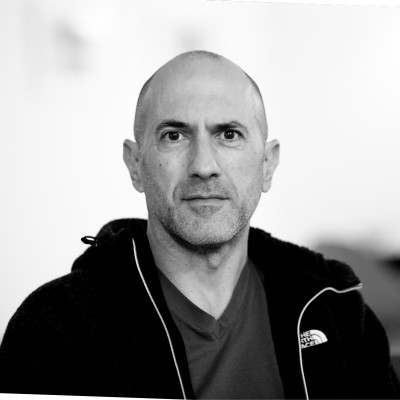
Christian writes for GlamBon on technology, culture and the odd corners of lived experience. An engineer by training with a liberal-arts streak, he is drawn to the places where the body, the machine and the everyday quietly negotiate with one another.
Notes & sources
- International Myopia Institute, Interventions for Controlling Myopia Onset and Progression 2025 — synthesis of randomised trials finding ortho-k among the most effective myopia-control modalities in children, with evidence drawn from paediatric populations. myopiainstitute.org
- American Academy of Ophthalmology, summarised in Overnight Orthokeratology: Technology, Efficacy, Safety, and Myopia Control — notes the effect on myopia control is potentially greatest in younger children. NCBI
- On the deliberate over-correction (compression factor) used to maintain all-day distance vision: clinical trial documentation, Short-term Orthokeratology With Increased Compression Factor. ClinicalTrials.gov
This essay describes one person's experience and is not medical advice. Orthokeratology is a clinical procedure that requires assessment and fitting by a qualified eye-care professional.