In an era defined by the frantic pace of the digital always-on, a discerning cohort of Millennials and Gen Xers is staging a quiet rebellion. They are not marching. They are not posting. They are simply — and radically — slowing down.
For the modern traveller, the Grand Tour has been replaced by the Slow Linger. The goal is no longer to check boxes or accumulate passport stamps like trophies. Instead, there is a growing movement toward a life lived with more texture and less noise — one that values the provenance of a loaf of sourdough as much as the architecture of the city square it was baked beside, and that prioritises the health of a local ecosystem over the convenience of a tourist trap.
The new luxury isn't found in the exclusive. It is found in the intentional.
GlamBon Manifesto · Spring 2026The Urban Village
While London and Berlin remain global hubs, the GlamBon set is quietly retreating from the neon of Mitte and the crowds of Piccadilly. Instead, they are finding home in the village atmospheres of neighbourhoods like Neukölln's quiet canals and the leafy, independent stretches of Hackney.
In these spaces, the day starts not with a rush, but with a ritual. It is about the local roastery where the barista knows your name — not because you are a regular, but because you took the time to ask about the bean's origin. This is urban living as an art form: supporting the micro-economies that keep a city's soul intact. It means choosing the small-batch ceramicist over the high-street chain, ensuring that your footprint in the city leaves a positive impression on its creative community.
The logic is not nostalgic. These urban villagers are not retreating from modernity; they are editing it — selecting from the enormous surplus of the contemporary city only those things that genuinely reward attention. The neighbourhood becomes a practice. You learn its light, its rhythms, its keepers. You become, however temporarily, a citizen rather than a consumer.
Alpine Altitudes and Sustainable Solitude
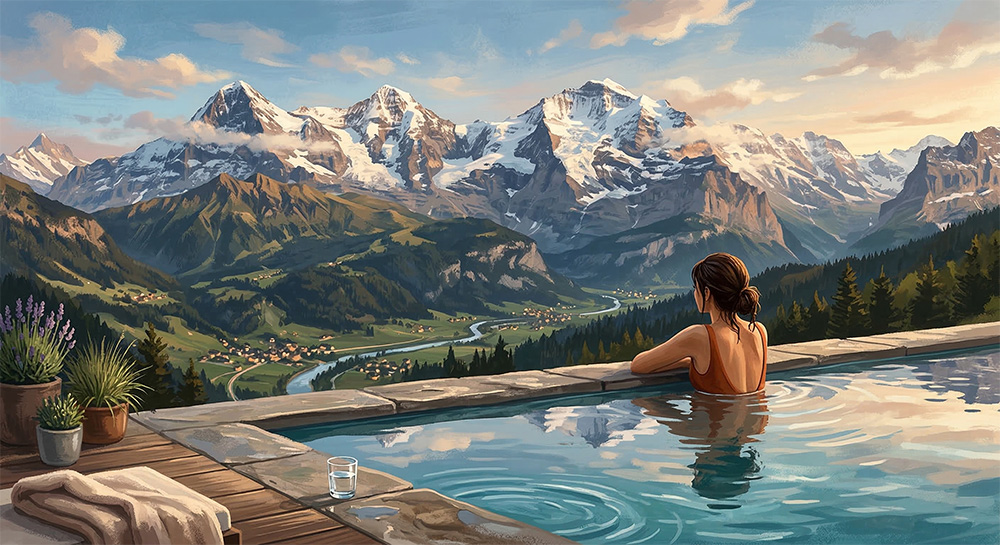
The Swiss Alps have long been a playground for the elite, but the new guard is looking past the glitz of St. Moritz. They are seeking out the Grisons, the high valleys where sustainable architecture meets traditional craftsmanship, and where the luxury on offer has nothing to do with thread count.
Living beautifully here means respecting the silence of the peaks. It means staying in a renovated maiensäss — a traditional alpine hut, powered by renewable energy — where the luxury is found entirely in the view and the stillness. The itinerary is dictated by the sun: a morning hike to a high-altitude dairy to buy cheese directly from the producer, followed by an afternoon of reading beside a glacial stream. This is travel as a form of restoration: giving back to the environment by treading lightly and consuming only what the land can gracefully provide.
The Italian Countryside: The Altar of the Table
In the Italian countryside — far from the photographed-to-exhaustion rows of Chianti — a deeper connection to the land is being forged. In regions like Umbria and the rugged interior of Puglia, the slow tourism mantra finds its purest expression.
Here, the piazza remains the living room of the community. To live beautifully is to sit at a long wooden table under the shade of a pergola, sharing a meal where every ingredient was grown within ten miles. It is an exchange of culture, not a consumption of it. By engaging with niche olive oil producers and heritage grain farmers, travellers are helping to preserve traditions that mass consumption nearly erased — and discovering, in the process, that the most interesting stories are almost never the ones in the guidebook.
The Table as Philosophy
The Italian table is not merely a place to eat. It is a duration, a ceremony, an argument about what matters. To share food grown from identifiable soil, prepared without abbreviation, is to participate in something that resists the acceleration the rest of the world has accepted as inevitable. The slow meal is a political act, dressed as pleasure.
The New Mantra: Sunrise to Sunset
The art of living beautifully is, ultimately, a commitment to presence. It is the realisation that we are not merely visitors to these places, but temporary stewards of their stories — and that stewardship requires attention, reciprocity, and a willingness to be changed by what we encounter.
The philosophy is not about sacrifice. It is not about renunciation. It is about replacing the anxious accumulation of experiences with something slower and more satisfying: the single afternoon in a single piazza, known so well by evening that you could describe its shadows. The conversation with the ceramicist that lasts two hours and produces nothing purchasable. The meal that ends when the last person is ready to leave.
The most sustainable way to travel is to leave a place slightly better — and its people slightly more appreciated — than when you arrived.
This is the GlamBon ethos: a life curated with care, lived with intention, and defined by the beauty of the slow, the local, and the real. It asks more of you than a checklist ever could. And it gives back, in return, something that no itinerary can promise: the feeling that you were actually somewhere — fully, unhurriedly, and without apology.