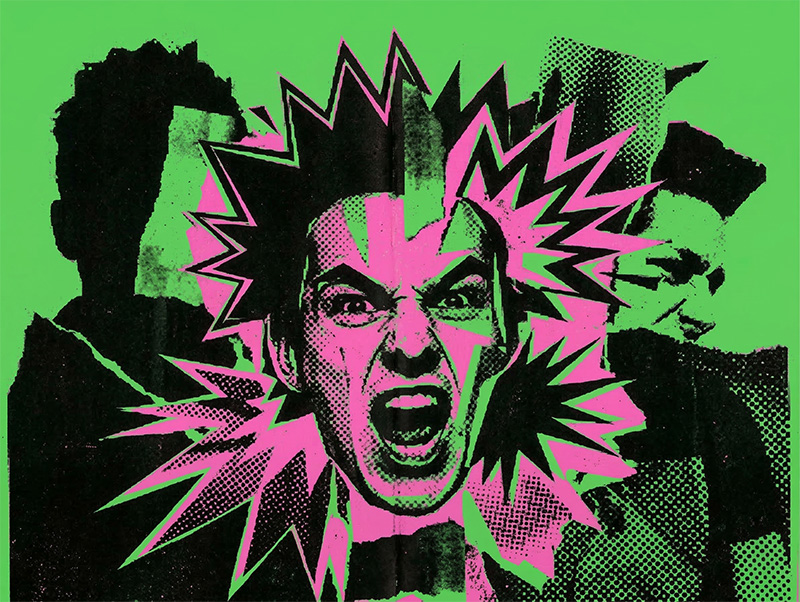
There is a moment — often years after the fact — when you realise that the music you remember and the image of the artist you carry are fused into a single thing. The sound conjures the look; the look contains the sound. They were never separate. They were always a single object.
A new generation of artists understands this intuitively and is building on it with a sophistication that previous generations could barely have imagined. The album, for these artists, is not a collection of songs. It is a complete aesthetic system: a world with its own visual logic, textural vocabulary, and sartorial argument.
"The best albums dress themselves. The music finds its fabric — and you can't unhear it once you can see it."
The Total Work
The idea of the Gesamtkunstwerk — the total artwork — has been circulating in art theory since Wagner. But its application to popular music has accelerated dramatically in the streaming era, where the visual identity of a project must work across a dozen different surfaces simultaneously: album art, short-form video, stage costumes, press imagery, merchandise.
The artists navigating this most successfully are those who have understood that fashion is not promotional supplement to the music — it is an extension of the same sensibility. The clothes carry frequencies the audio cannot.
Texture as Translation
Consider how the specific texture of a fabric can correspond to a sonic quality. Silk — cool, frictionless, capable of catching light without effort — maps readily to a certain kind of electronic production: clean, crystalline, reflective. Wool — warm, complex, slightly unpredictable at the surface — suggests something else entirely. Raw linen suggests analogue warmth. Latex suggests a particular kind of confrontation.
The artists working most deliberately with this correspondence are choosing their wardrobes the way a producer chooses a reverb setting: not for decoration, but for meaning.
The Role of the Fashion House
The relationship between artists and fashion houses has evolved from endorsement to collaboration to something closer to co-authorship. Several recent album cycles have involved sustained creative partnerships with designers — not to produce merchandise or advertising, but to develop a shared aesthetic language that serves both the music and the brand simultaneously.
These partnerships work best when the designer genuinely listens to the music — when the garments are responses rather than impositions. The results, when successful, produce objects that belong to both worlds and neither.
The Costume as Instrument
On stage, the relationship becomes most literal. The costume is an instrument — it shapes how the body moves, how the performer is seen from the back of a stadium, how the eye travels during a live performance. The most considered stage wardrobes are choreographed in the same sense that the music is: they create rhythm, tension, release.
This is not new — concert costume has always been theatrical. What is new is the degree to which the logic of the stage wardrobe now shapes every other visual dimension of an artist's world. The album and the arena have never been more continuous.