The story of specialty coffee isn't just about a caffeine kick. It is a global "Third Wave" movement that has transformed a bitter commodity into a sophisticated, wine-like experience defined by terroir, sustainability, and artistry — and it is still unfolding.
🌍 The Global Awakening
What Is Specialty Coffee?
For decades, coffee was simply "joe" — dark, bitter, and reassuringly uniform. The rise of the Specialty Coffee movement changed the game by placing quality above all else. Where the first wave made coffee convenient and the second made it familiar, the Third Wave made it worth paying attention to.
The movement that grew around this standard prioritises three things above all else:
- Traceability. Knowing the exact farm, altitude, and processing method — not just the country of origin.
- Flavour complexity. Notes of jasmine, blueberry, stone fruit, or even tomato — a world away from the flat bitterness of commodity roasts.
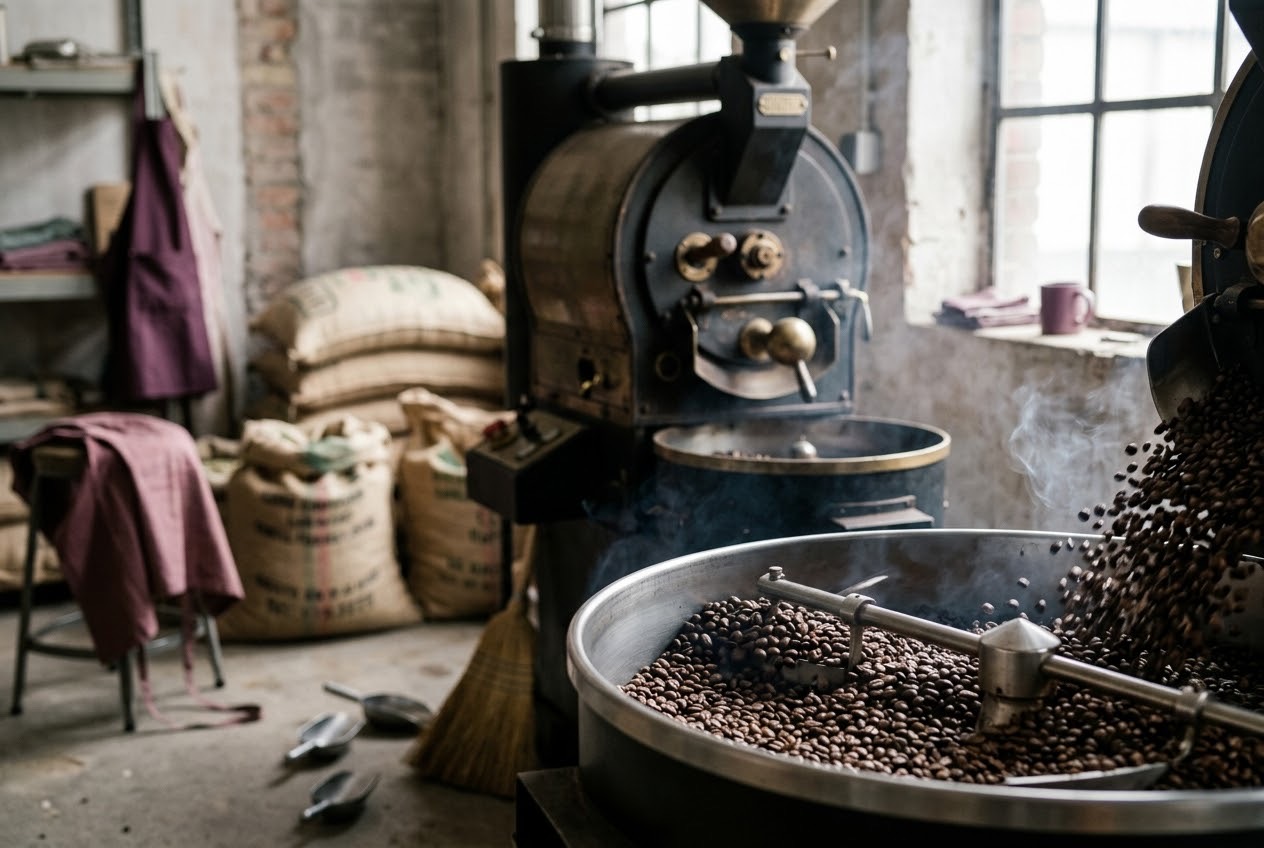
- Roasting as a craft. Lighter roasts that preserve the bean's natural character rather than masking defects with heat.
🌏 The Asian Renaissance
From Colonial Crops to Craft
Coffee arrived in Asia through colonial ambition. The Dutch brought it to Indonesia in the late seventeenth century; the French carried it into Vietnam in the 1850s. For most of the centuries that followed, the region was regarded as a reliable source of inexpensive Robusta — the hardier, more bitter species that fuelled industrial blends and instant coffee tins.
That reputation has since been entirely dismantled. Asia is now the fastest-growing specialty coffee market on the planet, led by a generation of producers, roasters, and café owners who have no interest in selling cheap beans to anonymous corporations.
The Origins: High-Altitude Arabica
The shift begins in the highlands. Northern Thailand's Doi Inthanon region, Myanmar's Shan State, and Vietnam's Central Highlands now produce Arabica coffees of remarkable delicacy. The altitude — often above 1,200 metres — slows the cherry's development, concentrating flavour and acidity in ways that low-land Robusta simply cannot achieve.
The Da Nang Connection
A vibrant specialty scene has exploded in Da Nang. Local roasters have moved away from the beloved condensed-milk phin filter toward precision pour-overs. Cafés like XLIII and Brewman rival the finest in London or New York.
Tokyo pioneered "slow coffee" — ritualistic, meditative, and executed with extraordinary precision. The minimalist aesthetic of Tokyo's third-wave cafés has become one of the defining visual languages of the global movement.
Seoul's café density is among the highest in the world. The city has embraced specialty coffee with the same obsessive energy it brings to design and food — precision brewing, direct-trade sourcing, and architecture that makes the act of drinking coffee feel theatrical.
Sitting at the foot of the hills where the beans are grown, Chiang Mai has become a living laboratory for farm-to-cup coffee, with roasters who can trace their single-origin lots to a specific plot of land on a specific mountain.
"Cities like Tokyo and Seoul didn't just adopt third-wave coffee — they transformed it into something that looked and felt entirely their own."
GlamBon — Coffee Culture, 2025🇦🇺 The Oceania Powerhouse
Australia & New Zealand: The Spiritual Architects
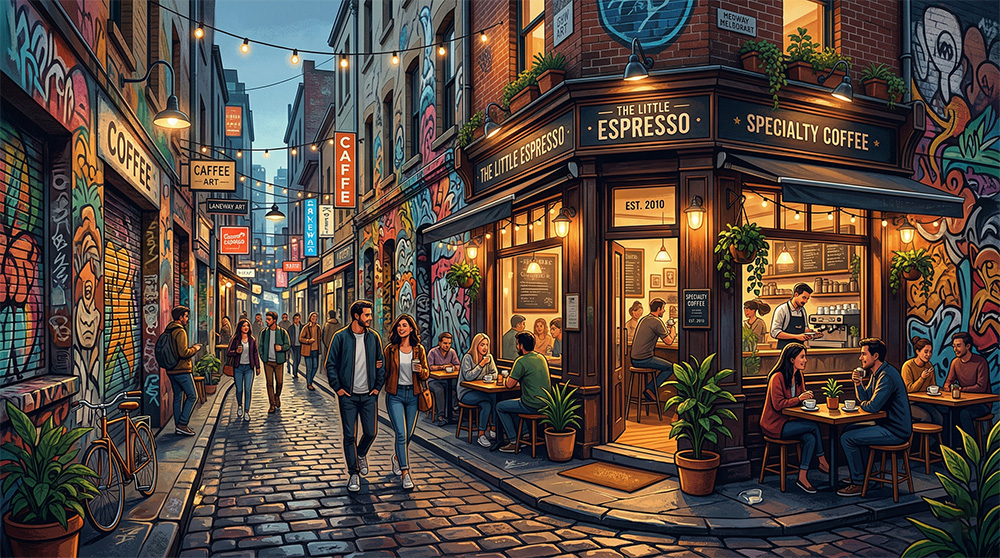
If Asia is the emerging heart of specialty production, Australia and New Zealand are the philosophical architects of the modern café experience. While the rest of the world was still nursing mugs of instant, the cities of Melbourne and Sydney were already in the grip of a serious espresso obsession.
The Southern Migration
The foundation was poured — quite literally — in the years after the Second World War. Italian and Greek immigrants arrived in Melbourne and Sydney carrying something more valuable than their luggage: a complete understanding of espresso culture. Gleaming La Marzocco machines appeared behind counters. Arguments about crema became neighbourhood sport. By the time the rest of the English-speaking world discovered cappuccino, Australia had moved on entirely.
The Flat White Revolution
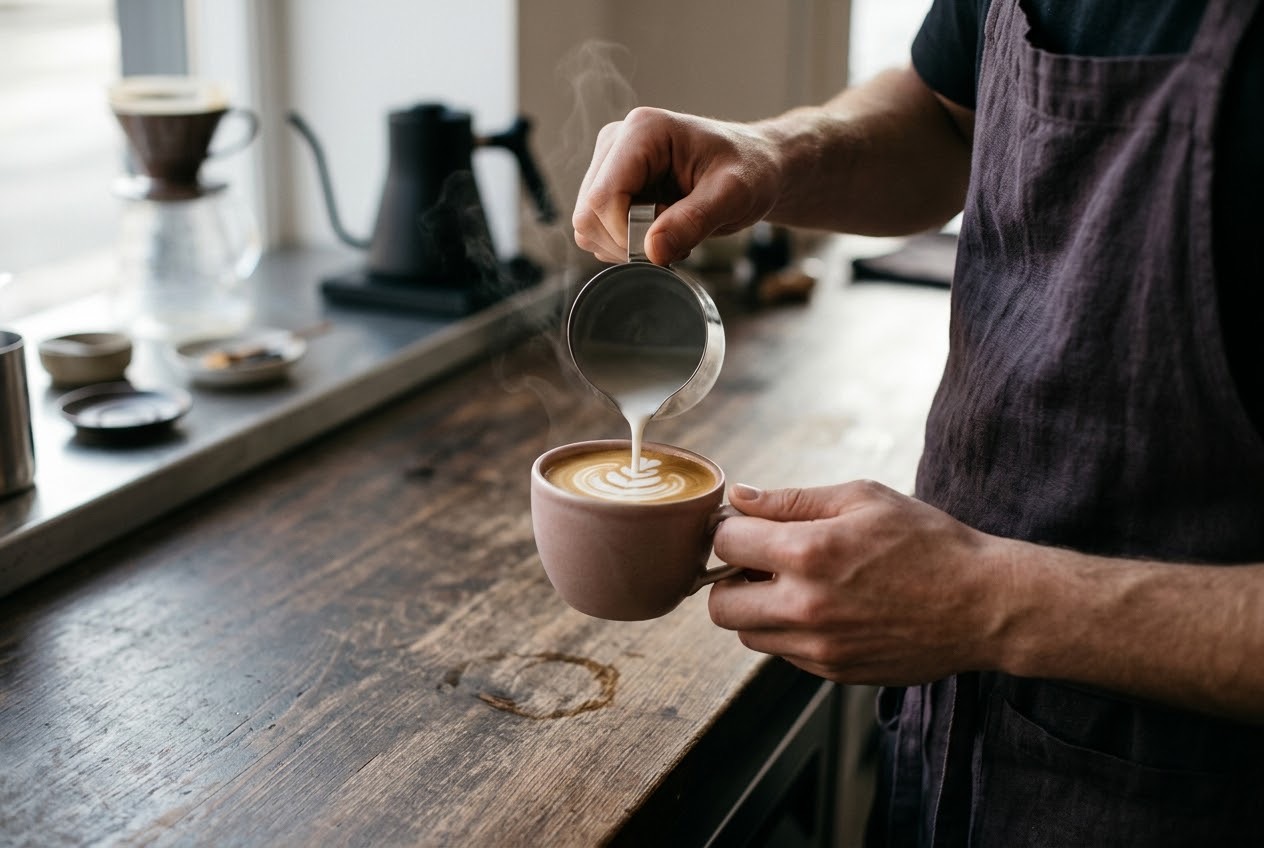
By the 1990s, the Australian and New Zealand coffee scenes had produced something genuinely new: the flat white. Smaller than a latte, stronger than a cappuccino, and defined by a layer of micro-foam so silky it almost defies physics — the flat white is both a technical achievement and a philosophy.
Focused on "café as lifestyle." The industry moved toward independent, owner-operated roasteries — like the pioneering Danes Specialty Coffee — that prized rigorous barista training and direct-trade relationships above all else.
Often credited with inventing the flat white (though the debate with Australia is eternal), New Zealand pushed a "quality over everything" ethos that made even the smallest suburban café a serious destination. The philosophy that coffee deserved the same respect as wine was born here.
☕ The Full Circle
Where We Are Now
The specialty wave has come full circle. Asian countries that were once exploited purely for their raw output are now exporting world-class, traceable, single-origin beans that command premium prices and genuine admiration. Australian-style "brunch and specialty" cafés have become the global gold standard, appearing in Paris, New York, Copenhagen, and back on the bustling streets of Da Nang — the very city that is now both producing and brewing some of the world's finest coffee simultaneously.
The Third Wave did not simply improve coffee. It changed the relationship between the person who grows it, the person who roasts it, and the person who drinks it — turning a morning ritual into an act of considered, connected consumption.
Did you know?
The flat white is now one of the most ordered specialty drinks globally, tracing its lineage directly to the milk-obsessed baristas of Sydney and Wellington. It even appears on the menu at the world's largest coffee chain — the surest sign that a movement has truly won.
Questions & Answers
Third Wave coffee is a movement that treats coffee as an artisanal product — similar to how fine wine is approached. It emphasises traceability to a specific farm and altitude, distinctive flavour profiles (jasmine, blueberry, stone fruit), lighter roasting that preserves natural character, and direct relationships between roasters and producers.
Beans must score above 80 points on a 100-point scale developed by the Specialty Coffee Association (SCA) to be classified as specialty. Beans scoring 90 or above are considered exceptional — often described as "outstanding" or "outstanding plus" specialty grade.
The origin of the flat white is one of coffee's great debates — both Australia and New Zealand claim it. What is agreed upon is that it emerged from the café cultures of Sydney and Wellington during the 1980s and 1990s, and that it was perfected in Australasia before spreading globally.
Asia is now the fastest-growing specialty coffee market in the world. High-altitude regions in Northern Thailand, Myanmar, and Vietnam's Central Highlands have shifted to producing premium Arabica. Cities like Tokyo, Seoul, and Da Nang now host Third Wave cafés that rival the best anywhere on earth.
Arabica grows at high altitude, has a more complex flavour profile, lower caffeine, and the terroir-driven nuance prized by the specialty world. Robusta grows at lower altitudes, has higher caffeine, a more bitter character, and was historically the dominant species in commercial blends across Asia.
A phin is a small metal drip filter that sits atop a glass and slowly drips coffee through a perforated plate — the traditional Vietnamese brewing method, typically paired with sweetened condensed milk. As the specialty movement grows in Vietnam, many cafés have moved to precision pour-overs, but the phin remains a beloved cultural icon.