The early 2020s didn't just see a rise in supplement use — they witnessed a full-scale industrial revolution of wellness. What was once a dusty aisle of "one-a-day" multivitamins transformed into a high-tech, multi-billion-dollar marketplace where the boundaries between nutrition, technology, and lifestyle dissolved entirely.
By 2026, we can look back and clearly see that this era was the tipping point where nutrition moved from preventative to performative — from something you did when you were ill to something that defined who you were.
From Seasonal to Essential
Before 2020, most people only thought about Vitamin C when they felt a sniffle coming on. The global pandemic changed the psychology of the consumer overnight. Immunity was no longer a seasonal concern — it became a daily shield, a ritual, an identity statement.
This shift created a vacuum that thousands of new companies rushed to fill. It wasn't just pharmaceutical giants anymore — lifestyle influencers, tech startups, and even high-end fashion houses began offering branded "wellness drops" and "immunity powders," each promising a slightly different version of invincibility.
"Immunity was no longer a seasonal concern. It became a daily shield — an identity statement that told the world how seriously you took yourself."
The Rise of the Biohacker
The early 2020s saw the democratisation of biohacking. Average consumers began chasing longevity with the fervour of Silicon Valley billionaires — and an entire category of products emerged to meet that ambition.
- NAD+ Precursors (NMN & NR) — Aimed at cellular repair and boosting mitochondrial function. These became the poster compounds of the longevity movement, beloved by researchers and wellness influencers in equal measure.
- Senolytics — Supplements designed to clear out "zombie cells" that contribute to inflammation and tissue dysfunction. Once a fringe concept, they moved rapidly into mainstream shelves.
- Adaptogens — Herbs like Ashwagandha and Rhodiola used to combat chronic stress. Ancient Ayurvedic medicine repackaged in clinical amber bottles, commanding premium prices and premium social media real estate.
The Hyper-Personalisation Pivot
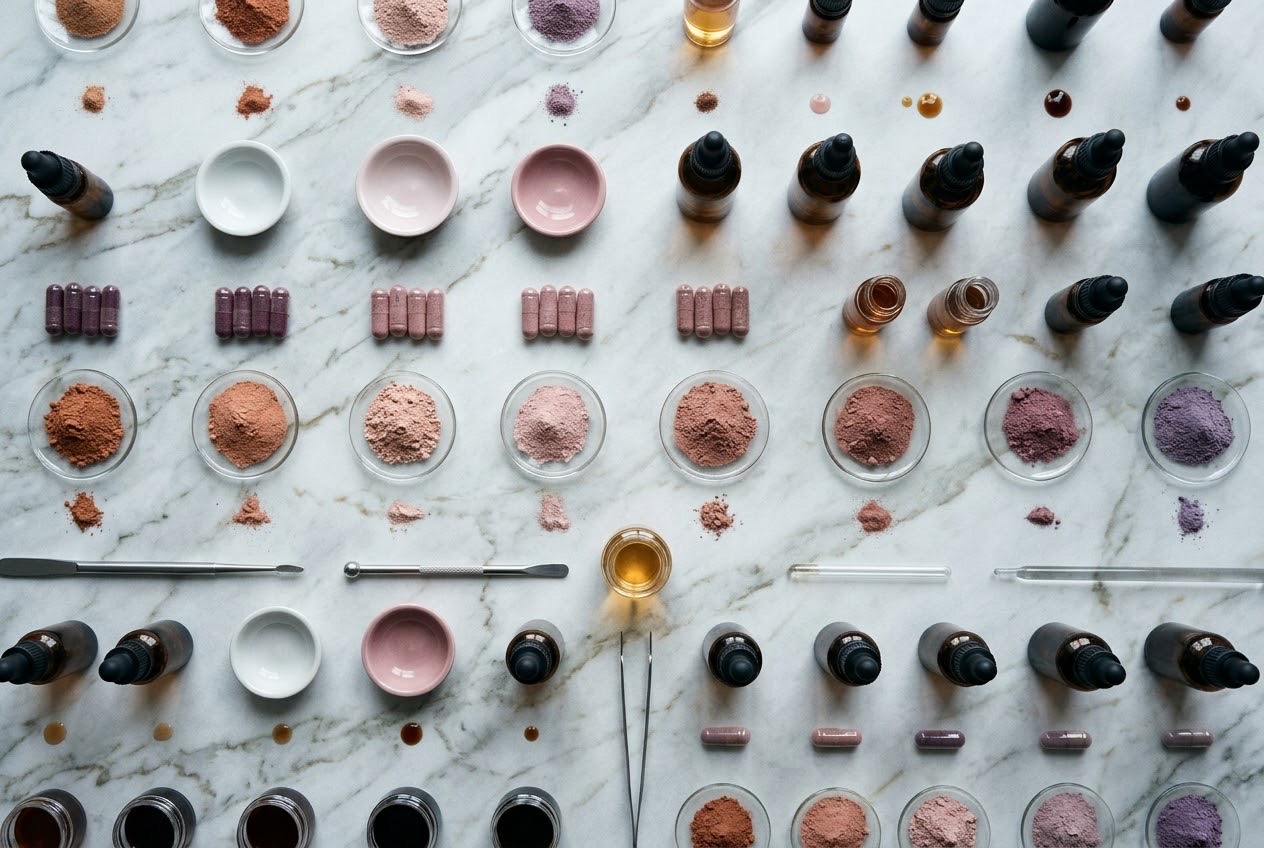
One of the biggest shifts was the death of the "one-size-fits-all" pill. Companies realised that if they could make a supplement feel like it was made specifically for you, you'd stay subscribed forever. The technology to do that arrived right on cue.
| Trend | Technology Used | Consumer Value |
|---|---|---|
| DNA-Based Nutrition | Genetic testing kits | Supplements tailored to your specific genetic deficiencies and metabolic profile |
| Blood-Biomarker Tracking | Monthly finger-prick tests | Real-time adjustment of dosages based on actual blood levels |
| 3D-Printed Vitamins | On-demand manufacturing | A single "polypill" with all custom nutrients in timed, layered release |
Beyond the Pill
Millennials and Gen Z drove a "pill fatigue" movement. Supplements had to taste good, look Instagrammable, and feel like a ritual rather than a medical obligation. The gummy revolution was just the beginning.
- Nutricosmetics — Collagen and biotin blends marketed as "edible skincare," bridging supplements and beauty into a new category entirely.
- Nootropics — "Brain boosters" like Lion's Mane mushroom replaced the afternoon coffee for the remote-work generation. Cognitive performance became the new fitness metric.
- Functional Beverages — Sparkling "stress-relief" water blurred the line between hydration, supplementation, and the ritual of the morning coffee itself.
With so many companies jumping in, the market became flooded. While innovation skyrocketed, so did wellness washing — products with minimal active ingredients sold at premium prices through clever branding. The savvy consumer learned to read labels; the less savvy paid for beautifully packaged placebos.
The 2026 Perspective
Looking back, the revolution of the early 2020s successfully shifted our collective focus toward healthspan — not just living longer, but staying functional and vibrant for more of those years. The race to stay younger turned a niche hobby into a foundational part of modern life.
The supplement aisle is no longer dusty. It's algorithmic, personalised, aesthetically considered, and deeply embedded in how we signal who we are. Whether that's a triumph of science, marketing, or both is a question worth sitting with — preferably over a functional mushroom coffee.
Frequently Asked Questions
The global COVID-19 pandemic was the primary catalyst. It shifted consumer psychology overnight, turning immunity from a seasonal concern into a daily priority. This created enormous demand that lifestyle brands, tech startups, and even fashion houses rushed to fill.
NAD+ precursors — primarily NMN and NR — support cellular repair and boost mitochondrial function. They surged in popularity during the biohacking movement as consumers sought science-backed ways to slow cellular ageing and extend healthspan.
Hyper-personalised nutrition uses genetic testing, blood-biomarker tracking, and on-demand manufacturing to create supplement regimens tailored to an individual's unique biology — rather than generic one-size-fits-all vitamins.
Wellness washing refers to marketing products with minimal active ingredients at premium prices, using sophisticated branding to suggest efficacy not backed by meaningful doses or clinical evidence.
Healthspan refers to the number of years a person lives in good health — remaining functional, cognitively sharp, and physically vital — as opposed to simply living longer. The wellness revolution shifted collective focus from extending lifespan to maximising healthspan.